WE ARE HIRING!
How to choose the right heating system for high-altitude Colorado homes
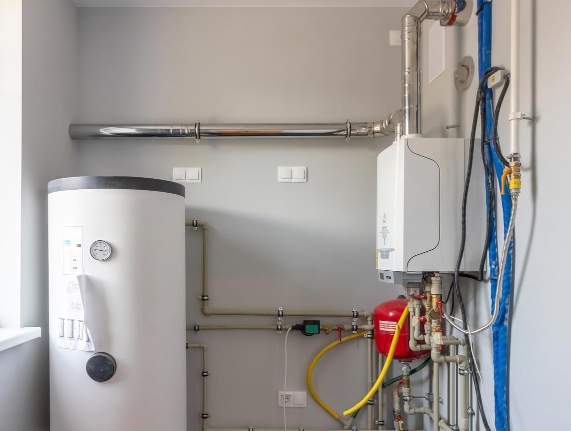
Picking a heating system in Western Colorado is not the same decision it would be in Denver, and it is definitely not the same decision it would be in Dallas. The altitude, the length of the heating season, and the daily temperature swings across the Uncompahgre Valley and the surrounding mountain communities create a specific set of demands that not every heating technology handles equally well. Choosing a heating system for high-altitude Colorado homes requires understanding how each option performs under these conditions, not just reading a spec sheet written for sea level.
The U.S. Department of Energy notes that most American homes are heated with either furnaces or boilers, and that upgrading to a high-efficiency system can cut fuel bills and pollution output significantly. But "high efficiency" means different things at different elevations. A system rated at 95 percent efficiency at sea level does not automatically deliver that same performance at 5,800 feet in Montrose or 8,750 feet in Telluride.
This article walks through the main heating options available to Western Colorado homeowners, explains how altitude affects each one, and gives you a practical framework for making the right choice based on your home, your location, and your priorities. Whether you are replacing an aging furnace, building new, or exploring alternatives like heat pumps and ductless systems, the goal is the same: reliable, efficient heat that matches the reality of living at elevation.
In this article, you will learn about:
- How altitude changes the way heating systems perform
- Gas furnaces and why they remain the default in this region
- Heat pumps and where they make sense at elevation
- Ductless mini-splits as a targeted solution for specific homes
- The factors that should drive your decision
- Getting the installation right from the start
Keep reading to understand your options clearly and choose a system that performs as well in practice as it looks on paper.
How altitude changes the way heating systems perform
Before comparing specific systems, it helps to understand the common thread that runs through every heating decision at elevation. Altitude affects combustion, air density, and heat transfer in ways that shift the performance of every type of heating equipment, and those shifts get more pronounced the higher you go.
Homeowners who skip this step often end up with a system that looked great in the showroom but underperforms once it is installed. Understanding the altitude effect upfront prevents that mismatch and helps you ask the right questions when talking to contractors.
Thinner air, less oxygen, harder combustion
At higher elevations, the air contains less oxygen per cubic foot. For any system that burns fuel, whether natural gas, propane, or oil, that means the combustion process is working with a leaner air-to-fuel ratio. The widely cited industry guideline is that furnace output should be derated by roughly 4 percent for every 1,000 feet above sea level. At Montrose's elevation of approximately 5,800 feet, that translates to a roughly 23 percent reduction in effective heating output compared to sea level.
If a furnace is not properly adjusted for this altitude, it can overfire. Overfiring means the gas input is higher than what the available oxygen can efficiently combust. The result is hotter operating temperatures inside the heat exchanger, accelerated metal fatigue, and a system that wears out faster than its rated lifespan suggests.
This derating requirement is not optional. It is a fundamental part of installing any combustion-based heating system at elevation, and it should be accounted for during the load calculation and equipment selection process. A technician who does not factor in altitude derating is setting the system up to underperform from day one.
How elevation affects heat transfer and airflow
Thinner air does not just affect combustion. It also affects how efficiently a system moves heat through your home. Blower fans push less air mass per revolution at higher elevations because there are fewer air molecules per cubic foot. The result is reduced airflow through the ductwork, which means less heat is delivered to the living space per cycle.
According to industry data, a blower fan that moves 90,000 pounds of air per hour at sea level may only push around 72,000 pounds at 6,000 feet. That 20 percent reduction in air mass means the system has to run longer to deliver the same amount of heating, which increases energy consumption and puts additional wear on the blower motor.
Duct design becomes even more important at altitude. Undersized ducts, excessive bends, or leaky connections that might cause minor comfort issues at sea level can create significant performance problems at elevation. A heating system is only as effective as the duct network that distributes its output.
The compounding effect of Colorado's climate
Altitude alone would be enough to affect system performance, but Western Colorado adds long heating seasons and dramatic daily temperature swings on top of it. From October through April, and sometimes into May in the high country around Crested Butte, your heating system runs for five to seven months straight. Daily temperature variations of 30 to 40 degrees force the system to cycle frequently, adding mechanical stress with every startup and shutdown.
The dry climate also increases airborne dust, which clogs filters faster and restricts airflow. All of these factors compound the altitude effect. A system that would perform adequately in a mild, low-altitude climate may struggle here unless it was specifically selected and installed for these conditions.
This is the context that should frame every equipment decision. The question is not just "which system is efficient?" It is "which system is efficient, reliable, and durable at 5,800 to 9,000 feet, through a six-month heating season, in dry, dusty conditions with wild temperature swings?"
Gas furnaces and why they remain the default in this region
For the majority of homes in the Montrose area and across the Uncompahgre Valley, a natural gas furnace is still the most practical and reliable heating choice. Natural gas is widely available, the technology is well understood, and modern high-efficiency furnaces deliver strong performance even at elevation when properly installed and maintained.
That does not mean a gas furnace is always the right answer for every home and every situation. But it is the baseline against which the alternatives should be measured.
Standard-efficiency versus high-efficiency models
Gas furnaces fall into two broad categories based on their AFUE rating. Standard-efficiency models operate at around 80 percent AFUE, meaning 80 cents of every fuel dollar becomes heat for your home and the remaining 20 cents is lost as exhaust. High-efficiency condensing furnaces operate at 90 to 98 percent AFUE, capturing additional heat from the exhaust gases through a secondary heat exchanger before they are vented.
The difference matters more in Western Colorado than in milder climates because the heating season is longer and fuel consumption is higher. A homeowner who runs the furnace five to six months per year will see a larger absolute savings from a high-efficiency system than someone who only heats for three months.
The ENERGY STAR program notes that certified gas furnaces in the northern U.S. can be up to 15 percent more efficient than standard models. Under the Inflation Reduction Act, furnaces with an AFUE of 97 percent or higher may qualify for a federal tax credit of up to $600, which helps offset the higher upfront cost.
High-efficiency condensing furnaces do require specific installation considerations that standard models do not.
- They need PVC venting rather than a traditional metal flue, which must be properly routed and pitched for condensate drainage.
- They produce acidic condensate that requires a drain connection, and in freezing climates, that drain line needs protection from ice.
- The secondary heat exchanger adds a component that requires periodic inspection and maintenance.
These requirements are not deal-breakers, but they are reasons to work with a contractor who has experience installing condensing furnaces at altitude.
How gas furnaces handle altitude
A properly installed gas furnace performs well at Western Colorado elevations, but "properly installed" is doing a lot of work in that sentence. The gas orifice must be derated for altitude to prevent overfiring. The load calculation must account for the reduced air density. And the ductwork must be designed to compensate for the lower air mass that the blower can move.
When all of those adjustments are made correctly, a modern gas furnace delivers consistent, reliable heat through even the coldest stretches. The technology is proven, parts are widely available, and any qualified HVAC technician in the region can service and maintain the system.
Gas furnaces also have a practical advantage in extreme cold. Unlike heat pumps, which lose efficiency as temperatures drop, a gas furnace delivers the same heat output whether it is 30 degrees or minus 10 degrees outside. For homes in Ouray where sustained sub-zero temperatures are a real possibility, that consistency matters. The same applies to properties in Silverton and other high-mountain communities throughout the region.
Variable-speed and modulating furnaces for better comfort
The most advanced gas furnaces on the market use variable-speed blower motors and modulating gas valves. Instead of running at full capacity every time the thermostat calls for heat, these systems adjust their output to match the actual demand. At 40 degrees outside, the furnace might run at 40 percent capacity. At zero degrees, it ramps up to 100 percent.
The benefits go beyond efficiency.
- Temperature swings between cycles are smaller, so the house stays more consistently comfortable.
- The blower runs at lower speeds for longer intervals, which reduces noise significantly.
- The gentler startup and shutdown cycles put less mechanical stress on the system, potentially extending its lifespan.
- Lower-speed operation improves air filtration because air passes through the filter for a longer period each cycle.
For homeowners who are replacing an older single-stage furnace, the difference in comfort and noise level is often the most immediately noticeable improvement.
Heat pumps and where they make sense at elevation
Heat pump technology has advanced significantly in recent years, and cold-climate models can now operate effectively at temperatures well below zero. The U.S. Department of Energy has stated that heat pumps can reduce electricity use for heating by up to 50 percent compared to electric resistance systems. But how they perform at high altitude is a more nuanced conversation than how they perform in cold weather alone.
How heat pumps work and why altitude complicates things
A heat pump does not generate heat by burning fuel. It transfers heat from the outdoor air into your home, even when it is cold outside, using a refrigerant cycle and a compressor. In cooling mode, it reverses the process, working like a central air conditioner.
The challenge at altitude is twofold. First, the thinner air reduces the heat pump's ability to absorb heat from outdoor air, because there are fewer air molecules per cubic foot to extract thermal energy from. Second, the same reduced air density that affects furnace blowers also affects the heat pump's outdoor fan, reducing the volume of air it can move across the coils.
Cold-climate heat pump models are designed to handle low temperatures, with some maintaining usable heating capacity down to minus 13 degrees Fahrenheit or lower. But cold-climate ratings are tested at sea-level air density. At 6,000 to 9,000 feet, the same unit will have to work harder to achieve the same result, and real-world efficiency at altitude may fall below the rated specifications.
This does not mean heat pumps are wrong for Western Colorado. It means they need to be selected, sized, and installed with altitude-specific considerations in mind.
Dual-fuel systems as the practical middle ground
For many Western Colorado homeowners, a dual-fuel system, which pairs a heat pump with a gas furnace, offers the best combination of efficiency and reliability. The heat pump handles heating during mild to moderately cold weather, when it operates at its highest efficiency. When temperatures drop below a set point, typically somewhere between 25 and 35 degrees depending on the model and the home, the system automatically switches to the gas furnace for primary heating.
This approach captures the energy savings of the heat pump during the shoulder months (fall and spring) and the early weeks of winter, while relying on the proven performance of a gas furnace during the coldest stretches when the heat pump's efficiency drops.
A dual-fuel system also provides both heating and cooling in one integrated setup. The heat pump operates as a central air conditioner in summer, which eliminates the need for a separate cooling system.
The tradeoff is higher upfront cost, since you are installing two pieces of equipment rather than one. But for homes with access to natural gas and significant cooling needs in summer, the long-term operating cost savings and the flexibility of having two heating sources can justify the investment.
When a standalone heat pump is the right call
In some situations, a standalone heat pump makes sense without a gas furnace backup.
- Homes that do not have access to natural gas and would otherwise rely on propane or electric resistance heating are strong candidates, since even an altitude-derated heat pump will be significantly more efficient than either alternative.
- New construction projects where the home can be built with excellent insulation, air sealing, and ductwork designed for heat pump operation from the ground up.
- Homes at lower elevations within the service area, closer to Delta or the valley floor, where altitude effects are less severe and winter temperatures are slightly milder.
In any of these cases, proper sizing for altitude is critical. An undersized heat pump at elevation will rely too heavily on electric backup heat, which is expensive to run and defeats the purpose of the system.
Ductless mini-splits as a targeted solution for specific homes
Ductless mini-split systems have become increasingly popular in Colorado, and for certain homes and situations, they are an excellent choice. But they are not a universal replacement for a central heating system, and understanding their strengths and limitations helps you decide whether they belong in your plan.
What mini-splits do well
A ductless mini-split consists of an outdoor compressor unit connected to one or more indoor air handlers mounted on walls or ceilings. Each indoor unit heats and cools the room it serves, and because there are no ducts, there is no ductwork loss. In homes where ductwork is in poor condition, absent entirely, or running through uninsulated spaces, that elimination of duct loss can be a significant efficiency gain.
Mini-splits also provide zone control by default. Each indoor unit operates independently, so you can heat the rooms you are using without wasting energy on the rooms you are not. For homes with additions, converted garages, workshops, or rooms that the existing system struggles to reach, a mini-split can solve specific comfort problems without replacing the entire heating system.
As a Fujitsu Elite Dealer, Snipps has access to mini-split equipment with extended warranty coverage, which adds value for homeowners considering this option.
The limitations at high altitude
Mini-splits face the same altitude challenges as conventional heat pumps, since they use the same underlying technology. The outdoor unit's ability to extract heat from the air decreases with elevation, and the reduced air density affects the compressor and fan performance.
Most ductless mini-split manufacturers specify altitude limits and may require specific installation modifications above certain elevations.
- Gas orifice adjustments are not applicable since mini-splits are electric, but refrigerant charge and airflow settings may need calibration for altitude.
- The outdoor unit needs adequate clearance from snow, ice, and debris, which is a bigger consideration in mountain communities with heavy snowfall.
- At extreme cold temperatures combined with high altitude, the unit's heating capacity may drop below what is needed for the space, requiring supplemental heating.
For homes in Telluride above 8,700 feet, mini-splits should be viewed as a supplement to a primary heating system rather than a standalone replacement. The same applies in Ridgway and other communities above 7,000 feet, unless the home is very well insulated and the system is specifically sized for the elevation and climate.
Where mini-splits fit best in this market
The strongest use cases for ductless mini-splits in Western Colorado include:
- Second homes and vacation properties in the ski towns, where zone control allows owners to heat only occupied areas and keep unoccupied rooms at a lower temperature.
- Older homes in Hotchkiss that lack ductwork and would require significant renovation to install a central system.
- Properties in Cimarron and other small communities where ductwork installation is impractical due to the home's layout or construction.
- Home additions, sunrooms, or converted spaces where extending the existing ductwork is impractical or too expensive.
- Supplemental heating for specific problem rooms that the central system cannot adequately serve.
In these scenarios, a mini-split is a targeted, efficient solution. For whole-home primary heating in a cold, high-altitude climate, a central system, whether a gas furnace, a heat pump, or a dual-fuel combination, is generally the more reliable choice.
The factors that should drive your decision
With the options laid out, the decision comes down to matching the right technology to your specific situation. No single system is the best choice for every home in Western Colorado, and the right answer depends on a handful of practical factors.
Your home's fuel access and infrastructure
The single biggest factor in many cases is whether your home has access to natural gas. Homes on the natural gas grid have the full range of options available, including standard and high-efficiency furnaces, dual-fuel systems, and heat pump alternatives. Homes that rely on propane are in a different calculation, since propane is generally more expensive per unit of heat than natural gas, which shifts the economics in favor of heat pump or dual-fuel systems.
If your home already has functioning ductwork in good condition, a central system, either a furnace or a heat pump with a ducted air handler, will deliver whole-home comfort most effectively. If the ductwork is in poor shape or nonexistent, a ductless solution or a combination of ductless and central systems may make more sense than investing in new ductwork throughout the house.
Electrical capacity also matters. Heat pumps and mini-splits require adequate electrical service. Older homes may need a panel upgrade to support these systems, which adds to the project cost.
Your elevation and local climate exposure
A home in the valley near Delta at roughly 5,000 feet faces different heating conditions than a second home near Telluride at nearly 9,000 feet. The higher the elevation, the greater the combustion derating for gas equipment and the larger the efficiency reduction for heat pump equipment.
For homes below about 6,500 feet with moderate winter exposure, both gas furnaces and heat pumps perform well. Above that elevation, gas furnaces maintain more consistent performance, and heat pumps may need supplemental heating more frequently. The highest-altitude properties in the service area are generally best served by gas furnaces or dual-fuel systems.
Your home's specific exposure matters too. A south-facing home with good solar gain and windbreaks will have lower heating demands than a north-facing home on an exposed ridge at the same elevation. The load calculation should capture these differences.
Long-term costs, not just upfront price
The least expensive system to install is not always the least expensive system to own. A standard 80 percent AFUE furnace costs less upfront than a high-efficiency condensing model, but the monthly fuel savings from a 95-plus percent AFUE system accumulate over 15 to 20 years of ownership.
Consider the full ownership picture when comparing options.
- Upfront equipment and installation cost, including any electrical or ductwork modifications.
- Estimated annual operating cost based on your local fuel rates and the system's real-world efficiency at your elevation.
- Maintenance costs, including annual tune-ups and any altitude-specific service requirements.
- Expected lifespan of the equipment under your local operating conditions.
- Available incentives, including federal tax credits, state programs, and utility rebates that reduce the effective upfront cost.
A contractor who presents only the installation price without discussing long-term operating costs is not giving you the full picture. Ask for a side-by-side comparison that includes projected annual costs over at least 10 years.
Getting the installation right from the start
No matter which system you choose, the quality of the installation determines whether you get the performance the equipment is capable of delivering. A perfectly good furnace or heat pump, installed poorly, will underperform, waste energy, and likely fail sooner than it should.
Why load calculations are non-negotiable at altitude
A Manual J load calculation is the industry-standard method for determining how much heating capacity a home needs. It accounts for square footage, ceiling heights, insulation levels, window quality, air leakage, and local climate data. At altitude, additional adjustments for reduced air density and combustion derating must be incorporated.
A contractor who sizes your system based on a rule of thumb, "one ton per 500 square feet" or similar, is not accounting for the variables that matter most in Western Colorado. Research from the Air Conditioning Contractors of America has shown that standard sea-level calculations can undersize equipment by 10 to 20 percent in high-altitude environments. If you are already exploring a heating replacement, this is the first conversation to have with your contractor.
Oversizing is equally problematic. An oversized furnace short cycles, creating temperature swings, wasting fuel, and wearing out components prematurely. An oversized heat pump can cause humidity problems in summer and cycling issues in winter. The load calculation is the foundation of a good installation, and cutting corners here costs money for the entire life of the system.
Ductwork, venting, and the details that make or break performance
Even with the right equipment and correct sizing, the system will not perform well if the supporting infrastructure is wrong. Ductwork must be properly sealed, insulated, and sized for the system's airflow requirements. The DOE has noted that duct losses can account for as much as 35 percent of a furnace's output when ducts run through unconditioned spaces like attics or crawlspaces.
For high-efficiency condensing furnaces, PVC venting must be installed with the correct slope for condensate drainage, and the condensate drain line needs protection from freezing in Colorado's climate. For heat pumps, the outdoor unit must be positioned with adequate clearance for airflow and snow management.
Electrical connections, gas line sizing, thermostat wiring, and indoor air quality considerations like filtration and humidity control all factor into a complete installation. Each detail contributes to how well the system performs and how long it lasts.
Choosing a contractor who understands this climate
The contractor you choose matters as much as the equipment you select. In Western Colorado, you need a team with specific experience installing and servicing HVAC systems at altitude. That means technicians who understand combustion derating, altitude-specific load calculations, and the practical realities of maintaining equipment through long, harsh winters.
Look for NATE certification, which verifies that technicians have passed rigorous industry exams on installation and service practices. Ask about their experience with the specific type of system you are considering, whether that is a condensing furnace, a heat pump, a dual-fuel system, or a ductless installation. And ask for references from homes at a similar elevation and climate to yours.
A good contractor will not push a single system type on every home. They will assess your home's specific conditions, explain the tradeoffs between options, and recommend the system that makes the most sense for your situation, not the one with the highest profit margin.
Conclusion
Choosing a heating system for a high-altitude Colorado home is not a decision you make from a catalog. It requires understanding how altitude affects every type of equipment, knowing your home's specific conditions, and working with a contractor who has the expertise to match the right system to the right situation.
The good news is that there are strong options available for every type of home and every budget in this region. Gas furnaces remain the most reliable and proven choice for whole-home heating at elevation. Heat pumps and dual-fuel systems offer efficiency advantages when properly sized and installed. Ductless mini-splits solve specific problems elegantly.
What they all have in common is that they perform at their best only when they are selected, sized, and installed by professionals who know this climate and this altitude.
Snipps Heating & Air Conditioning serves homeowners across five counties in Western Colorado, from the valley floor to the high country. With NATE certified technicians, Fujitsu Elite Dealer status for ductless systems, and nearly 30 years of experience working at altitude, the team can help you evaluate your options and choose the heating system that fits your home, your budget, and your climate.
HVAC repairs, maintenance, and installation for homes and businesses across Montrose and the Western Slope. Family-run, certified, and here when you need us since 1996.