
WE ARE HIRING!
How to prepare your home's air conditioning for summer in Montrose
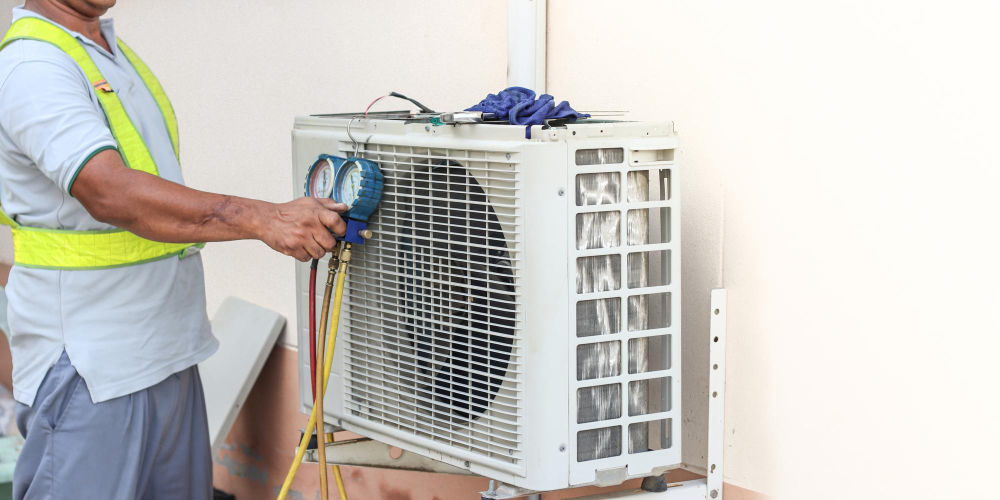
Summer in Montrose brings intense heat that puts your air conditioning system to the test. You can prepare your central air conditioner for summer by cleaning or replacing the air filter, clearing debris from the condenser unit, inspecting the thermostat, and testing the system before the hottest days arrive. Taking these steps now helps your AC run better and lowers the chance of a breakdown when you need cooling the most.
Getting your air conditioner ready doesn't require special skills or expensive tools. Most preparation tasks take just a few minutes and can save you from costly repairs later. Simple maintenance also cuts down on energy bills and keeps your home comfortable all season long.
When you prepare your air conditioning for summer in Montrose, you are protecting both your comfort and your equipment against a high-desert season that runs hot and hard on cooling systems. A seasonal air conditioner repair and installation check is the backbone of that prep, and most of the rest you can handle yourself.
In this article, you will learn about:
- Timing your first steps for seasonal readiness
- Reducing AC strain with thorough cleaning
- Identifying issues at the thermostat
- Eliminating airflow obstacles
- Recognizing when professional service is needed
- Adapting to Montrose's summer challenges
- Proactive habits to prevent mid-summer failures
Keep reading to learn how a little spring effort keeps your home cool, your bills lower, and your AC out of the emergency-repair line during the first heat wave.
Timing your first steps for seasonal readiness
Spring maintenance sets your air conditioning system up for reliable performance when temperatures climb. Starting early gives you time to fix problems before you need cooling the most.
Risks of waiting until hot weather arrives
When you put off summer preparation until the first heat wave, several problems pile up at once. HVAC companies get flooded with service calls during peak season, so you might wait days or even weeks for a technician.
Your system could fail on the hottest day of the year, exactly when your household needs it most. Emergency repairs also cost more than a scheduled maintenance visit.
Parts might not be in stock when everyone needs the same repairs at the same time, leaving you in a hot house while equipment ships in.
A broken AC during summer also puts vulnerable family members at risk. According to the Centers for Disease Control and Prevention, older adults and young children are among those most likely to suffer heat-related illness, and staying in an air-conditioned space is one of the best ways to protect them, which is exactly why a reliable system matters before the heat sets in.
What early pre-summer actions can prevent
Starting in April or May gives you time to catch small issues before they turn into major failures. Clean or replace your air filter to restore proper airflow and efficiency.
Check your outdoor condenser unit for debris, leaves, and dirt buildup. The U.S. Department of Energy recommends keeping the area around the condenser clear and trimming foliage back at least two feet on all sides so the unit can move air and shed heat properly.
Test your system by turning it on during a mild day. Listen for unusual sounds like grinding, squealing, or rattling that signal trouble.
Inspect the refrigerant lines running to your house for damage or wear, and look for any torn insulation that needs repair. Then schedule a professional tune-up while technicians still have open appointments, so they can check refrigerant levels, test electrical connections, and verify every component works correctly.
Benefits of spring inspections for system reliability
A professional inspection in spring catches problems your system developed during its winter dormancy. Technicians spot worn parts before they fail and leave you without cooling.
Your energy bills stay lower when the system runs at peak efficiency. Clean components and a correct refrigerant charge keep electricity use down, while neglected airflow quietly drives it up.
Early maintenance also extends your equipment's life. Regular care prevents the kind of slow damage that forces an early replacement.
You also get your pick of appointment times and better pricing before the summer rush, and many Montrose HVAC companies run spring specials on maintenance packages. Booking ahead in a town like Delta or anywhere across the valley means you are not competing with every other homeowner once the heat hits.
Reducing AC strain with thorough cleaning
Proper cleaning protects your system from overwork and prevents breakdowns during Montrose's warmest months. Regular filter changes and outdoor-unit maintenance keep air moving smoothly and cut the energy needed to cool your home.
How fresh air filters support system efficiency
Dirty air filters block airflow and force your AC to work harder than it should. When air struggles through a clogged filter, your system uses more energy and runs longer cycles to reach the temperature you set.
Check your filters every month during summer. Replace disposable filters when they look gray or dirty, and clean reusable filters with water, letting them dry fully before reinstalling.
Clean filters also improve indoor air quality by trapping dust and allergens, which ties directly into broader indoor air quality services for homes with allergy concerns. This simple step takes less than five minutes but makes a real difference in how your system performs.
Clearing outdoor units for maximum airflow
Your outdoor condenser needs clear space to expel heat properly. Leaves, grass clippings, dirt, and debris build a barrier that traps heat around the coils.
Turn off power to the unit before cleaning. Remove visible debris by hand and rinse the fins gently with a garden hose from the inside out. Trim bushes and plants back at least two feet from all sides, the same clearance the Department of Energy recommends for steady airflow.
Bent fins restrict airflow even when the unit looks clean. You can buy a fin comb at a hardware store to straighten damaged fins carefully. The condenser needs unobstructed airflow to release heat from your home efficiently.
What routine cleaning protects you from
Neglected AC systems work noticeably harder than well-maintained ones, which shows up as higher electric bills every month through cooling season. A system straining against dirty components also wears out faster and needs more frequent repairs.
A failed compressor is one of the most expensive repairs an AC can need, while filters and a professional cleaning visit cost a small fraction of that. Spending a little on cleaning is what prevents the big emergency bill.
Your system also lasts longer when it isn't fighting to push air through dirty parts. Routine cleaning is one of the cheapest ways to add years of reliable service to the equipment you already own.
Identifying issues at the thermostat
The thermostat controls your entire AC system, so checking it before summer helps prevent cooling problems. Settings drift over winter, sensors can read temperatures incorrectly, and smart features sometimes need updates or adjustments.
Verifying thermostat settings in advance
Confirm your thermostat is set to cooling mode rather than heating or off. This simple step gets overlooked when the system sits unused through cooler months. Check that the temperature setting matches your comfort needs, typically somewhere between 72 and 78 degrees for most Montrose homes.
Replace the batteries if your thermostat uses them. Low battery power causes erratic behavior and can break communication with your AC unit. Most models show a low-battery warning, but it's better to swap them proactively each spring.
Look at the thermostat's surroundings for any changes since last summer. New furniture, lamps, or electronics nearby can skew its temperature reading. A heat source within a few feet of the thermostat will make it trigger cooling cycles more often than needed.
Remove the cover and gently clean inside with a soft brush. Dust on the internal components disrupts the electrical connections and sensor accuracy.
Detecting inaccurate temperature readings
Place a reliable thermometer near your thermostat and compare readings after about 15 minutes. A gap of more than two degrees means the sensor needs attention or replacement.
Watch whether your AC runs constantly but never reaches the set temperature. That points to a faulty sensor telling the system the house is warmer than it really is, which drives your bills up while your home stays uncomfortable.
Look for short cycling, where the AC turns on and off every few minutes. A malfunctioning sensor might register quick temperature swings that don't reflect real conditions, and that pattern stresses your equipment and shortens its life.
Test the thermostat by dropping the setting five degrees. Your AC should start within a minute. If nothing happens or there's a long delay, the connection between the thermostat and the unit may have a problem.
Adjustments to improve smart thermostat performance
Update your smart thermostat's software through its app or settings menu. Manufacturers release updates that fix bugs and improve performance, and outdated software can cause scheduling or connectivity errors right when you need cooling.
Review and adjust your programmed schedules for summer patterns. Your heating-season schedule won't match your cooling needs, especially if your daily routine changed over the past year.
Recalibrate the temperature offset if your model offers it. This corrects a consistent reading difference without replacing the device, and most units let you add or subtract a few degrees from the displayed temperature.
Check your Wi-Fi signal at the thermostat location. Weak connectivity blocks remote adjustments and disrupts features like geofencing or adaptive learning, so move your router closer or add an extender if the signal is poor. Finally, confirm any remote room sensors are enabled, clean, and communicating with the main unit.
Eliminating airflow obstacles
Poor airflow reduces cooling power and forces your AC to work harder than necessary. Blocked vents, duct issues, and restricted pathways keep cool air from reaching every room.
Why vent and register placement matters
Furniture, curtains, and other items over your vents stop cool air from circulating. When a couch or bookshelf sits on a floor register, air bounces back into the duct instead of cooling the room, creating pressure imbalances that make the whole system less efficient.
Check every room for blocked supply vents and return grills. Move furniture at least a foot away from floor registers, and keep curtains and drapes off wall-mounted vents.
Return vents need even more clearance than supply vents because they pull air back into the system. Leave a good open gap in front of return grills so your AC gets the intake it needs to work properly.
Duct problems that affect home cooling
Leaky ducts waste a large share of the cool air your system produces. Gaps, holes, and disconnected sections let cooled air escape into attics, crawl spaces, and walls before it ever reaches your living areas.
Look for visible gaps or separations in any exposed ductwork in your basement or attic. Feel around the joints for air leaking out while the system runs. Crushed or kinked flexible ducts also restrict airflow badly.
Dust buildup inside ducts narrows the path air has to travel, forcing the blower to work harder and cutting the volume reaching each room. Professional duct cleaning clears these blockages and restores full airflow.
Recognizing early signs of airflow restriction
Weak airflow from your vents signals a problem somewhere in the system. Hold your hand near each register while the AC runs; the air should feel strong and steady.
Hot and cold spots around the house suggest blocked pathways or duct issues. One room might feel comfortable while another stays warm even with the AC running nonstop.
Longer cooling cycles that never quite get the house comfortable also point to airflow trouble. Listen for whistling at the vents, which often means restricted ducts, and watch for higher energy bills without heavier use, a common sign your AC is straining to move air through the system.
Recognizing when professional service is needed
Some AC issues are easy to spot, while others develop slowly and need trained eyes. Professional technicians have the tools and expertise to catch problems before they become expensive breakdowns on the hottest days.
Key components reviewed during seasonal tune-ups
A professional tune-up examines parts of your system most homeowners can't safely or effectively check on their own. Technicians measure airflow across the evaporator coil to confirm your system moves cool air efficiently throughout the home.
They inspect electrical connections and tighten any loose terminals, since faulty connections waste energy and can damage expensive components. They also test the capacitors that help your compressor and fan motors start and run.
The condensate drain gets special attention. A clogged drain can cause water damage and create conditions for mold growth, so professionals clear blockages and treat the line to prevent algae buildup.
A professional service typically covers your evaporator and condenser coils, the blower motor and fan belts, thermostat calibration, the system controls and safety devices, and a check of the ductwork for leaks or damage.
Commonly overlooked refrigerant and electrical concerns
Refrigerant rarely crosses a homeowner's mind, but a low charge makes your system work harder while cooling less. Only licensed technicians can legally handle refrigerant, check for leaks, and recharge the system to the correct level.
Your AC's electrical system includes safety switches, relays, and control boards that can fail without obvious warning. You might notice frequent cycling or a system that never reaches the set temperature, both of which often trace back to electrical problems that need professional diagnosis.
Voltage imbalances damage compressors and motors over time. Technicians measure voltage and amperage at key points to confirm the system gets stable power, and they inspect wire insulation for cracks or deterioration that could cause shorts.
Comparing preventive care versus emergency repairs
Preventive maintenance is a modest, predictable expense for a basic tune-up. An emergency repair during peak summer costs considerably more, depending on which parts fail and how urgently you need service.
Regular maintenance extends your system's life and keeps it running efficiently. According to the ENERGY STAR program, airflow problems alone can cut a system's efficiency by as much as 15 percent, so the cleaning and adjustments a tune-up includes pay you back in lower bills all season.
Emergency breakdowns always seem to happen at the worst time, during a heat wave when repair companies are swamped. You may wait days for service while your home bakes. Scheduled maintenance lets you pick a convenient time and skip the stress of an urgent call. In short, a preventive tune-up is a low-cost, scheduled, low-stress visit, while an emergency repair is a higher-cost, days-long, high-stress scramble, which is why booking ahead almost always wins.
Adapting to Montrose's summer challenges
Montrose's high-desert climate puts specific demands on air conditioning that differ from more humid regions. The mix of intense sun, low humidity, and big day-to-night temperature swings calls for extra attention during your seasonal maintenance.
Effects of Montrose's climate on AC systems
Montrose sits above 5,800 feet, with summer humidity often dropping below 20 percent. That dry air and high elevation push your AC to run long and hard through the hottest stretches of the day.
The intense UV radiation at higher elevations breaks down plastic components, refrigerant-line insulation, and exterior housing faster than at sea level. Your condenser also faces extra stress from the dusty conditions common across Western Colorado's semi-arid landscape, which is why nearby communities like Delta and Hotchkiss see the same dust-driven wear on outdoor units.
Temperature swings of 30 to 40 degrees between daytime highs and nighttime lows strain the system's components. Those rapid changes cause metal parts to expand and contract, which over time can loosen connections and open up refrigerant leaks.
The impact of extended heat on aging equipment
Air conditioners older than 10 years struggle more with Montrose's summer temperatures, which regularly top 90 degrees from June through August. Compressors in aging units run longer cycles to hold indoor temperatures, drawing more electricity and generating more heat.
Worn capacitors and contactors fail more often during extended heat waves, since these electrical parts degrade faster when the system runs continuously with little rest between cycles.
Refrigerant levels also drift down over time through microscopic leaks, and an older unit running even slightly low loses a meaningful chunk of its cooling capacity right when demand peaks.
Readying older units for another peak season
Start by replacing your air filter and clearing debris from around the outdoor unit. Check that the refrigerant lines show no wear or damage, especially where they meet the condenser.
Listen for grinding, squealing, or clicking during operation. These noises often point to failing motors, loose belts, or worn bearings that need prompt attention.
Schedule a professional check before temperatures climb so a technician can test capacitor strength, measure refrigerant, and flag parts likely to fail under summer stress. A unit well past 15 years old may be worth replacing if repair costs start approaching half the price of a new system, a judgment a heating replacement and installation professional can help you weigh alongside your cooling equipment.
Proactive habits to prevent mid-summer failures
Simple daily habits and awareness of common mistakes protect your AC from breaking down when you need it most. Knowing the warning signs helps you decide between repair and replacement before a full failure.
Daily habits that encourage reliable cooling
Glance at your thermostat each morning to confirm it's holding the temperature you want. That quick check surfaces problems early, before they grow into costly repairs.
Listen for unusual sounds when the system runs. Grinding, squealing, or banging noises point to mechanical issues that need attention.
Step outside now and then to check your condenser for debris, especially after lawn maintenance or a storm. Clear away leaves, grass clippings, and dirt that collect around the unit.
Watch the airflow from your vents through the day, since weak or warm air signals a performance problem. And change your air filter monthly during peak cooling season to keep airflow strong and dust out of the internal components.
Mistakes that shorten system life
Ignoring strange sounds or smells lets small issues grow into major failures. Address warning signs right away rather than waiting until the system quits.
Setting the thermostat too low forces the system to work harder than necessary. Keeping it at a steady, reasonable temperature when you're home is easier on the equipment and your bill.
Skipping annual professional maintenance leaves problems undetected, so a technician inspection belongs on every summer checklist before the heat arrives.
Closing vents in unused rooms creates pressure imbalances that strain the system, so keep your vents open for balanced airflow. And avoid planting shrubs or setting objects within two feet of the outdoor unit, which chokes off the airflow it depends on.
How to tell when replacement is warranted
Age is the primary signal. Systems older than 15 years need more frequent repairs and use more energy than modern units.
Repair cost is the next clear guide. When a single repair runs to roughly half the cost of a new system, replacement usually makes better financial sense.
A few other signs point the same direction: the system still uses R-22 refrigerant, which has been phased out of production and is now expensive to source; monthly bills climb without any change in use; rooms cool unevenly even after repairs; the system short-cycles on and off; or it needs service several times in one season.
Montrose summers demand reliable cooling, and a system racking up multiple service calls in a single season has reached the end of its useful life. When you compare a repair estimate against a new system, factor in the energy savings too, since modern units run far more efficiently than systems installed more than a decade ago and trim your monthly operating cost. Homeowners as far out as Cimarron face the same trade-off, where a dependable unit matters more than squeezing one more hard season out of failing equipment.
Conclusion
Getting your air conditioning ready for summer in Montrose takes some work, but it pays off. When you clean filters, check the refrigerant, and clear debris from your outdoor unit, your AC runs better and uses less energy.
Regular maintenance helps you avoid breakdowns when you need cooling the most, and a well-kept system lasts longer and costs less to run through the hot months.
The steps worth remembering are simple: replace or clean your air filter on schedule, clear leaves and debris from around the outdoor unit, confirm your thermostat works correctly, test the system early to catch problems, and schedule a professional inspection before summer starts.
You can handle the basics like changing filters and clearing the area around your unit. For refrigerant checks, electrical work, or any unusual noise, bring in a qualified technician.
Starting your prep now means your home stays comfortable when temperatures rise, your bills stay lower with an efficient system, and you avoid the stress of an emergency repair during a heat wave. When you're ready for a seasonal tune-up from a team that has served the Montrose area since 1996, reach out to Snipps Heating & Air Conditioning and head into summer with cooling you can count on.
HVAC repairs, maintenance, and installation for homes and businesses across Montrose and the Western Slope. Family-run, certified, and here when you need us since 1996.