WE ARE HIRING!
Emergency heating repair in Montrose: what to do when your heat goes out
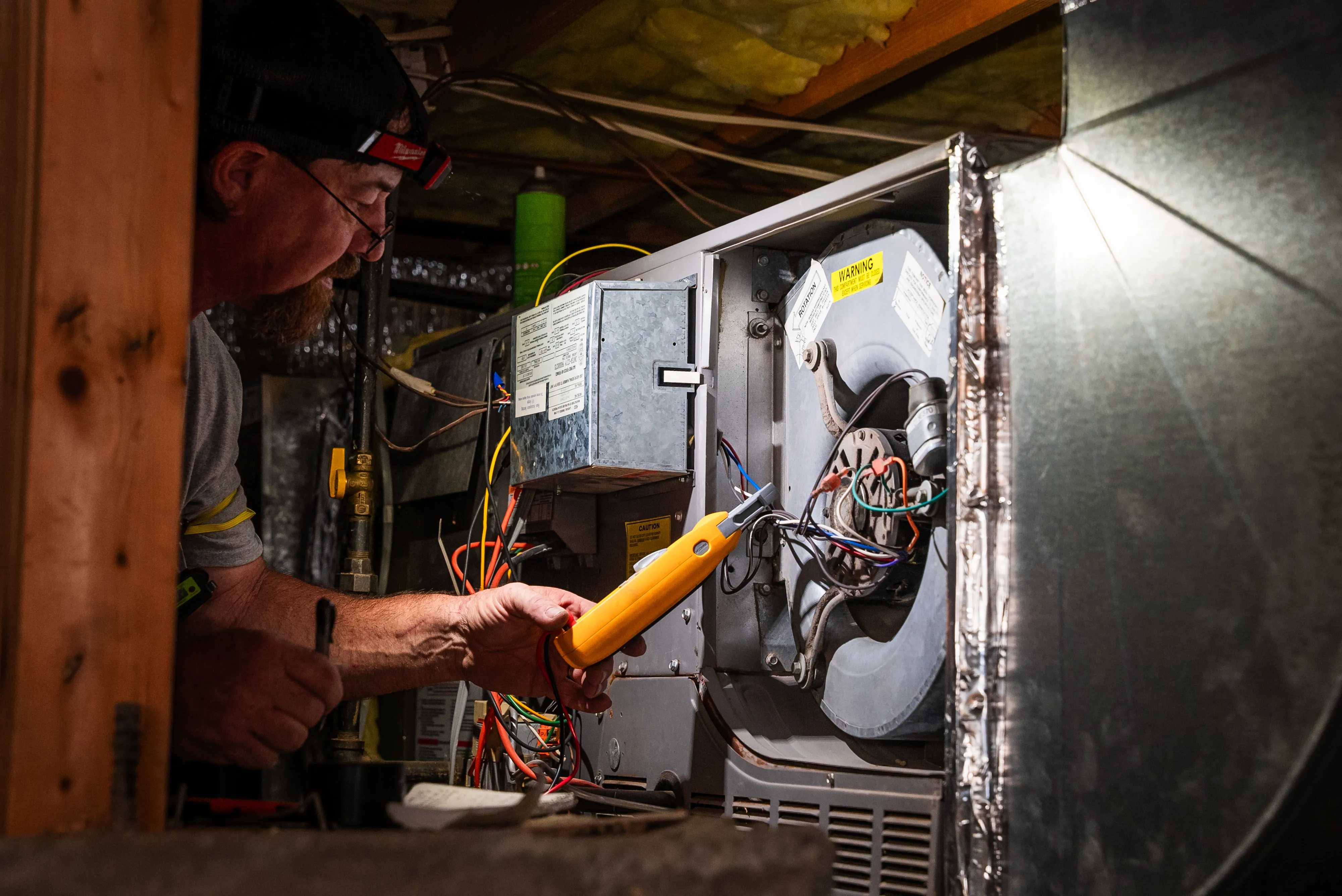
When you need emergency heating repair in Montrose, CO, the first few minutes should be about safety, not taking a furnace apart. A loss of heat on a cold Western Slope night can put people, plumbing, and the house at risk, but the right response depends on whether you have a routine equipment failure, a gas or carbon monoxide hazard, or an electrical problem.
Start by checking for danger signs. A carbon monoxide alarm, a gas odor, smoke, sparks, a burning smell, or physical symptoms such as headache and dizziness changes the situation from an HVAC problem to an emergency. Get everyone to safety before you troubleshoot or call a heating contractor.
If there is no immediate hazard, a few simple checks may restore heat or give the technician useful information. Snipps provides heating repair across Montrose and the Western Slope, including 24/7 emergency service when a failure cannot wait until regular business hours.
In this article, you will learn about:
- What to do in the first 10 minutes after your heat goes out
- How to stay warm without creating another emergency
- What common furnace and heat pump symptoms may mean
- When to repair the system and when to discuss replacement
Keep reading to protect your household, avoid unsafe shortcuts, and give the heating technician a clearer starting point.
What to do in the first 10 minutes after your heat goes out
A quiet furnace or cold supply vent does not always mean the same thing. The thermostat may have lost power, a breaker may have tripped, or a safety control may have stopped the equipment because something is wrong.
Treat the situation in the right order: rule out danger, make only basic homeowner checks, and then decide how quickly professional help is needed. Do not remove panels, bypass switches, relight equipment contrary to the manufacturer's instructions, or keep resetting a breaker.
Leave immediately for gas, fire, or carbon monoxide warnings
If you smell gas, hear hissing near a gas line, see smoke or flames, or have a carbon monoxide alarm sounding, get everyone outside. Do not flip switches, use a phone inside, light a flame, or try to locate the leak yourself. From a safe location, call 911 and the gas utility when appropriate, then wait for emergency personnel to say the property is safe.
Carbon monoxide, or CO, cannot be seen or smelled. The Centers for Disease Control and Prevention reports that unintentional, non-fire CO poisoning causes more than 400 U.S. deaths, more than 100,000 emergency department visits, and more than 14,000 hospitalizations each year.
Headache, dizziness, weakness, nausea, vomiting, chest pain, and confusion can be signs of exposure. If symptoms or an alarm occur, moving to fresh air and contacting emergency services takes priority over saving heat, opening the furnace, or scheduling an HVAC appointment.
Make only the checks that do not open the equipment
When there is no gas odor, alarm, smoke, burning smell, or other immediate danger, look at the system from the outside. These checks can catch a simple setting problem without exposing you to burners, wiring, moving parts, or hot surfaces.
Give each check one careful attempt. Repeated resets can hide an intermittent fault or keep damaged equipment trying to start, so stop if the problem returns.
- Confirm that the thermostat is set to heat, the setpoint is above room temperature, and the display has power.
- Replace thermostat batteries if the model uses them and the display is blank or showing a low-battery warning.
- Check whether the furnace service switch was turned off accidentally, but do not touch it if there is water, scorching, or damaged wiring nearby.
- Look for a tripped HVAC breaker. Reset it only once, and call for service if it trips again.
- Check whether the filter is visibly packed with dust and whether supply and return vents are open and unobstructed.
- Note any fault code visible through the furnace sight glass or on the thermostat, but do not remove an access panel to find one.
If the system starts and stays on, continue watching it for unusual noise, odor, or short cycling. A restart does not prove that the underlying cause is resolved, especially if a breaker or safety control interrupted operation.
If the equipment still will not run, leave it off and call for diagnosis. Snipps' Montrose HVAC team works with the elevation, dry air, dust, and temperature swings that affect local heating systems.
Protect people before the indoor temperature keeps falling
Move infants, older adults, and anyone with a medical condition to a reliably heated location early if the outage may last. Waiting until the house is already very cold makes travel and temporary lodging harder to arrange.
Close exterior doors, shut blinds or curtains, and gather everyone in a smaller interior area without blocking ventilation or exits. Add dry layers and blankets, and keep phones charged so you can communicate with the technician or emergency services.
If the house will be unattended or temperatures near plumbing are dropping, consider shutting off the main water supply and opening faucets to relieve pressure, provided you know how to do so safely. A plumber can advise on winterizing, and any pipe near an exterior wall, crawlspace, garage, or cabinet deserves special attention.
How to stay warm without creating another emergency
Temporary heat can make the wait safer and more comfortable, but improvised heating introduces fire, burn, electrical, and carbon monoxide risks. Use only equipment designed for indoor heating and follow its label and manual.
The risk is substantial enough to take seriously. The U.S. Fire Administration estimated 27,900 residential heating fires in 2023, even after heating fires declined 31% from 2014 to 2023.
Use portable electric heaters with a clear safety zone
Put a portable electric heater on a stable, level surface where children and pets cannot knock it over. Plug it directly into a wall outlet, never into an extension cord or power strip, and stop using it if the plug, cord, or outlet becomes hot or damaged.
Keep bedding, curtains, clothing, furniture, paper, and other combustible materials away. The U.S. Fire Administration's portable-heater research found that portable heaters were involved in only 3% of residential heating fires from 2017 through 2019 but accounted for 41% of fatal heating fires. Placing the heat source too close to combustible objects contributed to 48% of those fires.
Maintain at least a 3-foot clearance around the heater, turn it off when leaving the room, and never sleep with it running. A portable heater is a short-term measure for an occupied room, not a substitute for restoring the home's central heating safely.
Never use an oven, grill, or generator to heat the house
Do not use a gas oven or range as a room heater. Never operate a charcoal grill, camp stove, unvented outdoor heater, or generator inside a home, garage, basement, or other enclosed area.
These devices can produce carbon monoxide and create a fire hazard. Opening a window does not make an indoor generator or grill safe, and a garage door left open does not prevent exhaust from entering the home.
Use a fireplace or wood stove only if it is properly installed, maintained, and vented, and follow its operating instructions. Smoke and CO alarms should remain active throughout the outage, including during any use of approved backup heating equipment.
Reduce heat loss while you wait for service
Choose one or two occupied rooms and close doors to unused areas, as long as doing so does not isolate plumbing that needs warmth. Place rolled towels at obvious door drafts without blocking required combustion air or exit routes.
Avoid turning every electric heater on at once. Multiple high-wattage appliances can overload a circuit, especially in an older home. If a breaker trips, unplug the heaters and do not keep resetting it.
Keep the technician updated if indoor conditions are deteriorating or the household cannot remain safely in place. Moving to a warm location is the right decision when temporary measures cannot maintain safe conditions.
What common furnace and heat pump symptoms may mean
The symptoms you observe can help the technician prepare, but they are not a safe basis for opening or repairing the equipment yourself. Several different failures can produce the same cold-air complaint.
Note what happened before the heat stopped, what the thermostat shows, and whether the equipment attempts to start. A short video or audio recording can be useful if the sound is intermittent and can be captured without approaching unsafe equipment.
A furnace may start, stop, or blow cool air
A furnace that starts and shuts down quickly may have restricted airflow, an ignition problem, a dirty flame sensor, a failing pressure switch, or another safety-control issue. Cool air can also result from a thermostat fan setting, loss of ignition, overheating, or a problem elsewhere in the system.
Do not bypass a door switch, pressure switch, limit control, or flame sensor. These components help prevent unsafe operation, and defeating one can allow a fuel, fire, or overheating hazard to continue.
If the furnace is older and breakdowns are becoming frequent, review the broader warning signs of furnace replacement. Age alone does not condemn a system, but repair history, heat exchanger condition, efficiency, parts availability, and reliability all belong in the decision.
A heat pump can run without delivering enough heat
Heat pump air often feels less hot than furnace air, so long cycles are not automatically a failure. Concern rises when the indoor temperature keeps falling, the outdoor unit never runs, breakers trip, the system makes a harsh mechanical noise, or the outdoor coil becomes heavily encased in ice and does not clear through a normal defrost cycle.
Do not chip ice from the coil or pour hot water over it. Both actions can damage the coil or fan, and water can refreeze around the equipment.
Backup heat should operate according to the system design and controls. If it runs continuously, never comes on when needed, or produces a burning smell that persists, call for professional diagnosis. A homeowner comparing future options can also review how a heat pump and furnace perform in Western Colorado winters.
Some symptoms should move the call to emergency priority
A no-heat call becomes more urgent when weather, occupants, or system behavior raises the risk. Tell the dispatcher exactly what you observed so the company can prioritize accurately and advise you on whether the equipment should stay off.
Do not minimize a burning smell, repeated breaker trip, alarm, or vulnerable occupant just because the system works intermittently. Intermittent operation can still indicate an unsafe or worsening fault.
Request emergency attention when any of these conditions applies:
- The heat is completely out during freezing weather and the home is cooling quickly.
- An infant, older adult, or person with a health condition cannot safely remain in the falling temperature.
- The furnace repeatedly fails to ignite, shuts down, or makes a loud bang, grinding sound, or electrical buzzing.
- A breaker trips again after one reset, or you see scorching, sparking, smoke, or damaged wiring.
- The home is at risk of frozen plumbing or you cannot maintain a safe occupied area with approved temporary heat.
A gas odor, CO alarm, visible fire, or suspected CO symptoms still belongs with 911 and the gas utility first. An HVAC technician should enter only after emergency responders or the utility have cleared the property when those hazards are involved.
For equipment failure without an active life-safety hazard, professional furnace repair, replacement, and installation can identify whether the fault is repairable and whether continued operation is safe.
How to prepare for the technician and reduce another breakdown
Clear information helps the technician begin efficiently, especially during a cold-weather surge when many households may be calling at once. You do not need a technical diagnosis, only accurate observations.
After heat is restored, use the service findings to plan ahead. The right next step may be a straightforward repair, a maintenance correction, or a replacement discussion if the system is no longer reliable.
Gather the details that make diagnosis faster
Have the equipment brand and model available if you can read them without removing a panel. Tell the dispatcher whether the home has a gas furnace, electric furnace, boiler, heat pump, ductless system, or dual-fuel setup.
Also report the indoor temperature, outdoor conditions, thermostat message, visible fault code, unusual sound or odor, breaker behavior, and what you already checked. Mention whether the system has failed before and which repairs were made.
Make a clear path to the indoor and outdoor equipment, secure pets, and remove snow only if you can do so without touching the unit or creating a slip hazard. Keep receipts and previous service records nearby when available.
Compare repair and replacement with the same facts
A repair often makes sense when the problem is isolated, parts are available, and the rest of the system is in good condition. Replacement becomes more reasonable when failures are frequent, a major component is damaged, comfort remains poor, or the system cannot be operated safely.
Ask what failed, what caused it, which parts and labor are included, and whether another known issue is likely to create a near-term breakdown. A diagnosis should distinguish the immediate failure from optional improvements.
For an aging system, the expected furnace lifespan in Colorado is only one factor. A complete heating replacement plan should also account for the home's load, altitude, ductwork, fuel availability, cooling needs, and budget.
Build a prevention plan before the next cold snap
Schedule heating maintenance before sustained cold arrives, replace filters at the interval appropriate for the home and equipment, and keep vents and equipment areas clear. Test smoke and CO alarms according to manufacturer instructions and replace expired units.
Maintenance cannot prevent every component failure, but it can uncover worn parts, airflow problems, combustion concerns, and control faults before the system carries its heaviest winter load.
An HVAC preventive maintenance agreement can help keep inspections and tune-ups on schedule. The practical goal is not paperwork. It is fewer surprises and a documented equipment history when a repair decision is needed.
Conclusion
When your heat goes out in Montrose, begin with safety. Leave the home and call emergency services for a gas odor, carbon monoxide alarm, fire, smoke, or possible exposure symptoms. If no immediate hazard is present, limit your checks to the thermostat, power supply, filter, vents, and visible fault information.
Use temporary heat carefully, protect vulnerable household members early, and do not improvise with an oven, grill, generator, or outdoor fuel-burning device. A warm alternate location is safer than trying to push questionable equipment through the night.
Once a technician arrives, accurate observations and service history can shorten the path to a diagnosis. The goal is not simply to make the system start again, but to restore heat without overlooking the reason it stopped.
Contact Snipps Heating & Air Conditioning for emergency heating repair in Montrose and across the Western Slope.
HVAC repairs, maintenance, and installation for homes and businesses across Montrose and the Western Slope. Family-run, certified, and here when you need us since 1996.