
WE ARE HIRING!
How much does furnace replacement cost in Montrose, CO in 2027?
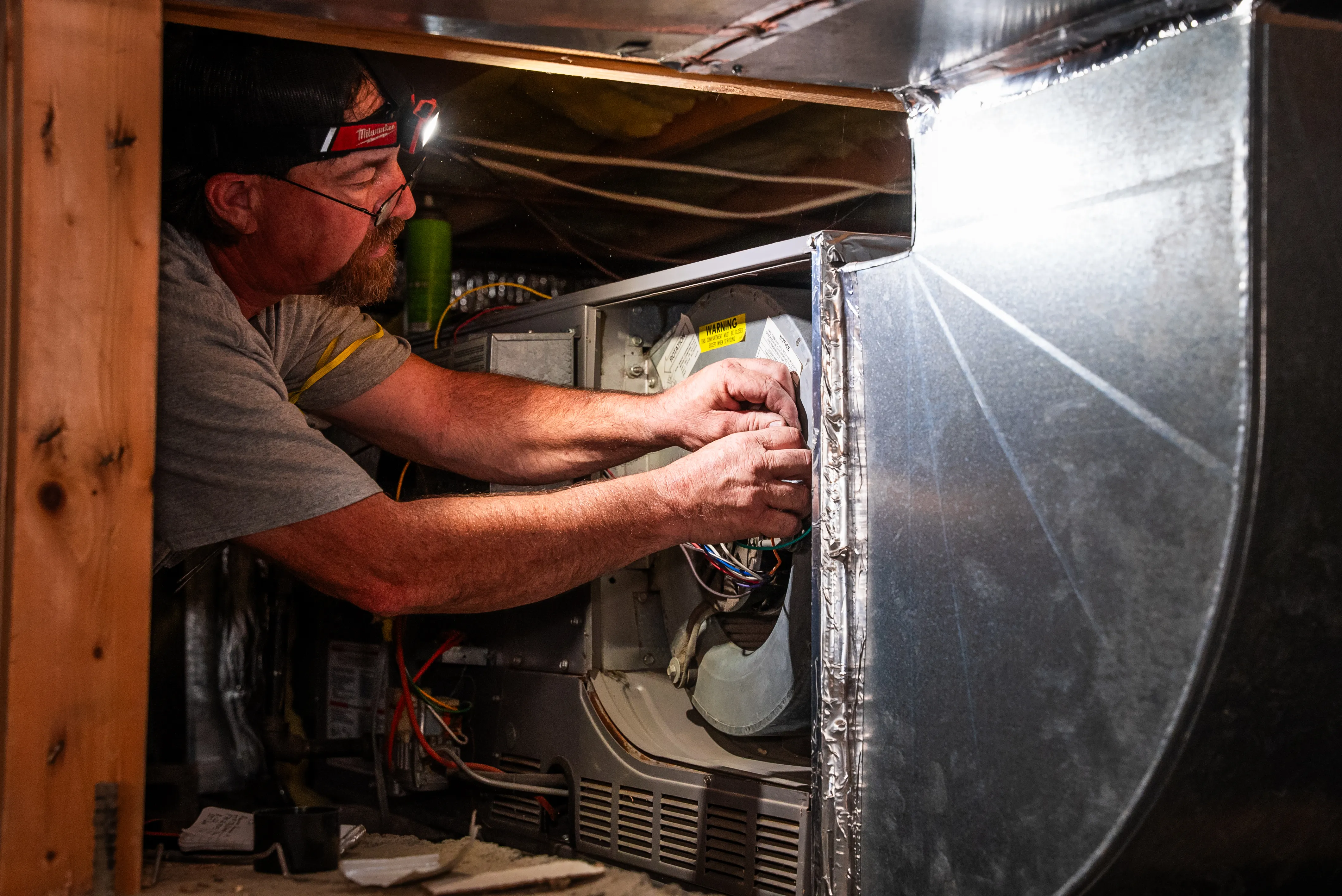
Furnace replacement cost in Montrose, CO in 2027 will likely fall around $5,000 to $10,000 for many straightforward residential gas-furnace projects. Treat that as a planning range, not a published local average or a substitute for an in-home estimate. A simple same-location changeout may land near the lower end, while high-efficiency equipment, venting changes, duct corrections, difficult access, or gas-line work can move the total beyond it.
The furnace cabinet is only part of the price. A complete installation can include removal, labor, fittings, venting, condensate drainage, gas and electrical connections, thermostat work, permits, startup, combustion testing, and adjustments for the home's actual heating load.
The City of Montrose places the community at an elevation of 5,800 feet, so sea-level sizing and setup assumptions do not belong in a local quote. Snipps' furnace repair, replacement, and installation service accounts for the home, the equipment, and the Western Slope conditions where that equipment will operate.
In this article, you will learn about:
- What a furnace replacement may cost in Montrose in 2027
- Which choices and site conditions change the final price
- What should be included in a complete furnace estimate
- How to decide whether replacement is worth the investment
Keep reading to build a realistic budget and compare furnace proposals on more than the number at the bottom.
What should you budget for a Montrose furnace replacement in 2027?
No government agency publishes a Montrose-specific retail average, and a contractor cannot price the full job accurately from square footage alone. The most useful online number is therefore a documented planning benchmark with clear limitations.
The $5,000 to $10,000 range in this article is an inference from federal installed-cost modeling, inflation through 2026, and the additional scope that can appear in a Western Colorado replacement. It assumes a conventional residential gas furnace using existing ducts. New duct systems, major structural work, fuel conversion, or combined heating and cooling replacement belong in a different budget.
Federal cost models give you a starting point, not a local quote
The U.S. Department of Energy's consumer-furnace technical support document modeled average total installed costs in 2022 dollars of $3,571 for an 80% AFUE furnace, $3,984 for a 95% AFUE furnace, and $4,198 for a 98% AFUE furnace. Those averages include the equipment and installation, but they are national analytical values rather than Western Colorado transaction prices.
Updating those three figures with the Bureau of Labor Statistics CPI calculator through August 2026 produces approximately $4,100, $4,560, and $4,805 in 2026 dollars. That calculation helps establish a floor for planning, but it does not price a particular brand, contractor, home, or 2027 labor market.
The local planning range is intentionally broader because real replacement work can include scope that an average model cannot predict. A written estimate from the home remains the only reliable way to know where your project falls.
A basic replacement and a premium replacement are different jobs
A lower-cost proposal usually assumes that the existing furnace location, ducts, gas supply, electrical circuit, return-air path, and vent route can be reused with minimal modification. The equipment may use a single-stage gas valve and a simpler blower and control package.
A higher-cost proposal may include a two-stage or modulating furnace, a variable-speed blower, communicating controls, filtration changes, a new vent route, condensate management, or significant transitions between the furnace and existing ducts. Those features can improve comfort and control, but they should be tied to a real need in the home.
Do not compare a basic single-stage quote directly with a variable-speed, high-efficiency proposal and assume the price difference is contractor markup. Ask each company to identify the efficiency, capacity, stages, blower type, warranty, and installation work included.
Complex projects can move above the planning range
Some homes need more than a furnace swap. An undersized return, deteriorated ductwork, an unsafe flue, a shared vent with a water heater, limited service access, or an unsuitable drain location can change both the labor and materials.
Fuel conversion also creates a different project. Moving from electric resistance, propane, or another system to natural gas may require utility coordination, new piping, electrical changes, and construction work that is not part of a normal gas-furnace replacement.
If you are reconsidering the entire heating approach, compare a furnace with the best HVAC systems for mountain homes before committing to like-for-like equipment. A more expensive proposal can still be the better value when it solves a duct, comfort, cooling, or fuel problem the cheaper proposal leaves in place.
Why can two furnace quotes be thousands of dollars apart?
Two quotes can carry the same furnace capacity and still describe different installations. The price depends on equipment features, but it also reflects how the contractor handles airflow, combustion, drainage, controls, commissioning, and the existing system.
The right question is not only how much the furnace costs. It is what work the home requires for the selected furnace to operate safely and deliver its rated performance.
Furnace size and altitude shape the equipment choice
A furnace should be selected from a heating-load calculation, not from the square footage alone and not automatically from the old furnace's nameplate. Insulation, windows, air leakage, orientation, duct losses, and local winter conditions all affect the load.
Altitude changes the installation as well. Thinner air affects combustion and the amount of heat a furnace can deliver, so the manufacturer instructions and approved altitude adjustments must be followed. Simply buying a larger furnace can create short cycles, temperature swings, noise, and duct problems.
This is why choosing heating equipment for a high-altitude Colorado home requires more than a national sizing shortcut. A proposal should state the design heat loss, selected input and output capacity, and altitude assumptions.
Efficiency, stages, and blower design affect price
AFUE, or annual fuel utilization efficiency, estimates how much of the furnace's fuel becomes useful seasonal heat. A higher percentage means less heat is lost through combustion and venting, but it does not measure duct leakage or poor sizing.
Current ENERGY STAR furnace criteria require at least 97% AFUE for gas furnaces certified in Colorado, which ENERGY STAR classifies in its northern region. Certification is not the same as the federal minimum standard, so proposals should identify both the actual AFUE and whether the model is ENERGY STAR certified.
The Department of Energy says compliance with the new 95% AFUE federal standard begins December 18, 2028. That future requirement does not make 95% AFUE the federal minimum for a furnace purchased in 2027.
Efficiency is only one equipment choice. Single-stage, two-stage, and modulating heat output affect how closely the system follows the home's load. A variable-speed blower can improve airflow control and comfort, but the benefit depends on ducts and commissioning that let the blower operate as designed.
Venting, ducts, drainage, and access change labor
An 80% non-condensing furnace and a high-efficiency condensing furnace handle exhaust differently. A condensing system generally needs approved plastic venting and a drain for condensate, so a conversion may require a new route through the building and a plan for freezing conditions.
Duct transitions may also need fabrication when the new cabinet dimensions differ from the old furnace. Access through a tight crawlspace, attic, finished mechanical room, or steep property adds time compared with an open basement or garage installation.
Ask the contractor to identify these scope items before work starts:
- Furnace model, input capacity, output capacity, AFUE, stages, and blower type.
- Load-calculation result and the altitude adjustment used for selection and setup.
- Supply and return duct modifications, filter cabinet, and airflow corrections.
- Venting, combustion air, condensate drainage, gas piping, and electrical work.
- Thermostat, permits, inspections, removal, startup testing, and warranty terms.
A complete scope makes price differences easier to understand. It also reduces the chance that necessary work appears as a surprise change after the old furnace has already been removed.
Read the wrap-up carefully for exclusions. Drywall repair, painting, asbestos remediation, crane service, utility work, or correction of unrelated code issues may be outside the furnace contractor's base proposal.
What should a complete furnace replacement estimate include?
A strong estimate connects the price to a particular system and installation plan. It should be detailed enough that another contractor can bid the same basic scope and that you can tell what changes if you choose another efficiency tier.
It should also distinguish required work from optional upgrades. That separation lets you protect safety and performance without assuming every accessory is essential.
Equipment and installation should appear as one defined scope
The estimate should list the furnace model or a clearly defined equivalent, efficiency, heat input, heat output, stages, and blower. It should state whether the thermostat, filter setup, venting, drain, transitions, pad or supports, and startup materials are included.
Labor should cover removal and lawful disposal of the old unit, installation, connections, testing, and homeowner orientation. A price that covers only the furnace box does not answer what the finished project will cost.
The DOE's installed-cost definition includes labor, overhead, materials, delivery, removal, and applicable permit fees. Using that same broad definition makes quote comparisons more useful than comparing equipment prices found online.
Permits, inspections, and commissioning belong in the conversation
The City of Montrose handles permits and inspections for heating and cooling work. Its current Building Services information says that applications submitted beginning January 1, 2027 will move through the Cloudpermit system.
The city's published 2025 fee schedule lists a $50 residential mechanical permit fee and a $50 residential gas permit fee. Those figures may change before a 2027 installation, so the contractor should verify the applicable permit and fee rather than copying an older number into the estimate.
Commissioning should include more than confirming that warm air comes from the vents. The technician should verify safe combustion, gas input, temperature rise, static pressure, airflow, venting, drain operation, thermostat control, and safety functions as applicable to the model.
Warranty, maintenance, and operating cost affect value
Ask how equipment registration changes the factory warranty, what labor coverage the contractor provides, and what maintenance is required to preserve coverage. A long parts warranty does not automatically include diagnosis, labor, shipping, or refrigerant and accessory work.
Efficient equipment can reduce fuel use, but the savings should be kept in proportion. ENERGY STAR says certified northern gas furnaces can be up to 18% more efficient than baseline models and save an average of about $160 per year, while the result in a specific Montrose home depends on weather, rates, heat loss, and the furnace being replaced.
Maintenance supports that performance by protecting airflow and catching developing problems. An HVAC preventive maintenance agreement can make recurring service easier to plan.
Snipps' current membership options show the actual services and terms available through the company.
How can you decide whether the replacement is worth it?
The lowest first cost is not always the lowest ownership cost, but replacing working equipment early is not automatically economical either. The decision should begin with a diagnosis of the existing system and a comparison of realistic alternatives.
Use the same time horizon for every option. Include immediate repair, likely near-term repairs, expected fuel use, any cooling equipment affected by the decision, warranty coverage, and how long you expect to own the home.
Compare repair cost with reliability, safety, and remaining life
A repair may be sensible when the furnace is in sound condition, the failed part is available, and the home has been comfortable. Replacement becomes easier to justify when failures are recurring, a major component is compromised, the system has safety concerns, or comfort remains poor after repairs.
Age helps frame the decision, but it should not decide it alone. ENERGY STAR suggests considering replacement when a furnace or boiler is more than 15 years old.
The Department of Energy uses an assumed 21-year residential furnace life in one federal purchasing analysis. Those are planning references, not promises for a specific unit.
Review the signs a furnace may need replacement alongside the diagnosis and repair history.
The factors that affect furnace lifespan in Colorado provide additional context, but inspection results are more useful than age by itself.
Compare a furnace with heat pump and dual-fuel options
A furnace replacement is not the only possible project. If the air conditioner is also near the end of its life, a heat pump may handle both heating and cooling. A dual-fuel system can pair a heat pump with a gas furnace and use each under the conditions selected by the controls.
The furnace versus heat pump decision should account for local energy prices, low-temperature capacity, electrical service, ducts, cooling needs, and backup heat. Comparing only the furnace price leaves half of that decision out.
Do not assume a 2027 federal tax credit will close the price gap. The IRS confirms that the Section 25C energy efficient home improvement credit is not allowed for property placed in service after December 31, 2025. Verify any state, utility, manufacturer, or local incentive when you request the quote because programs and funding can change.
Compare proposals line by line before choosing
Collect at least enough detail to identify whether contractors are solving the same problem. A short estimate with one total can hide differences in sizing, controls, venting, commissioning, and warranty.
Price matters, but an installation that is sized or set up incorrectly can create years of comfort and reliability problems. Ask questions until you understand both the equipment and the work around it.
Use this final review before signing:
- Confirm that each proposal is based on an in-home assessment and heating-load calculation.
- Match the model, capacity, AFUE, stages, blower, thermostat, and warranty across bids.
- Compare duct, vent, drain, gas, electrical, permit, removal, and startup scope.
- Ask which items are required, which are optional, and what could trigger a change order.
- Verify current incentives and financing terms without treating projected savings as guaranteed.
The clearer the proposal, the easier it is to decide whether a higher bid reflects better equipment, necessary installation work, or an upgrade that does not serve your priorities.
Snipps can evaluate the existing system and build a heating replacement plan around the home's load, altitude, ducts, fuel, and comfort needs rather than a one-size price.
Conclusion
For 2027 planning, many straightforward gas-furnace replacements in Montrose may fit within a working budget of roughly $5,000 to $10,000. That range is intentionally broad, and projects with major venting, duct, access, fuel, or structural work can cost more.
The most useful estimate explains where the money goes. Equipment efficiency and features matter, but so do sizing, altitude adjustment, airflow, venting, drainage, permits, commissioning, and warranty coverage.
Before choosing, compare the repair case, the furnace replacement, and any heat pump or dual-fuel alternative that fits the home. A site-specific proposal should give you the information needed to judge both upfront price and long-term value.
Contact Snipps Heating & Air Conditioning for a furnace replacement estimate tailored to your Montrose or Western Slope home.
HVAC repairs, maintenance, and installation for homes and businesses across Montrose and the Western Slope. Family-run, certified, and here when you need us since 1996.