
WE ARE HIRING!
Best heat pumps for cold climate homes in Colorado in 2026
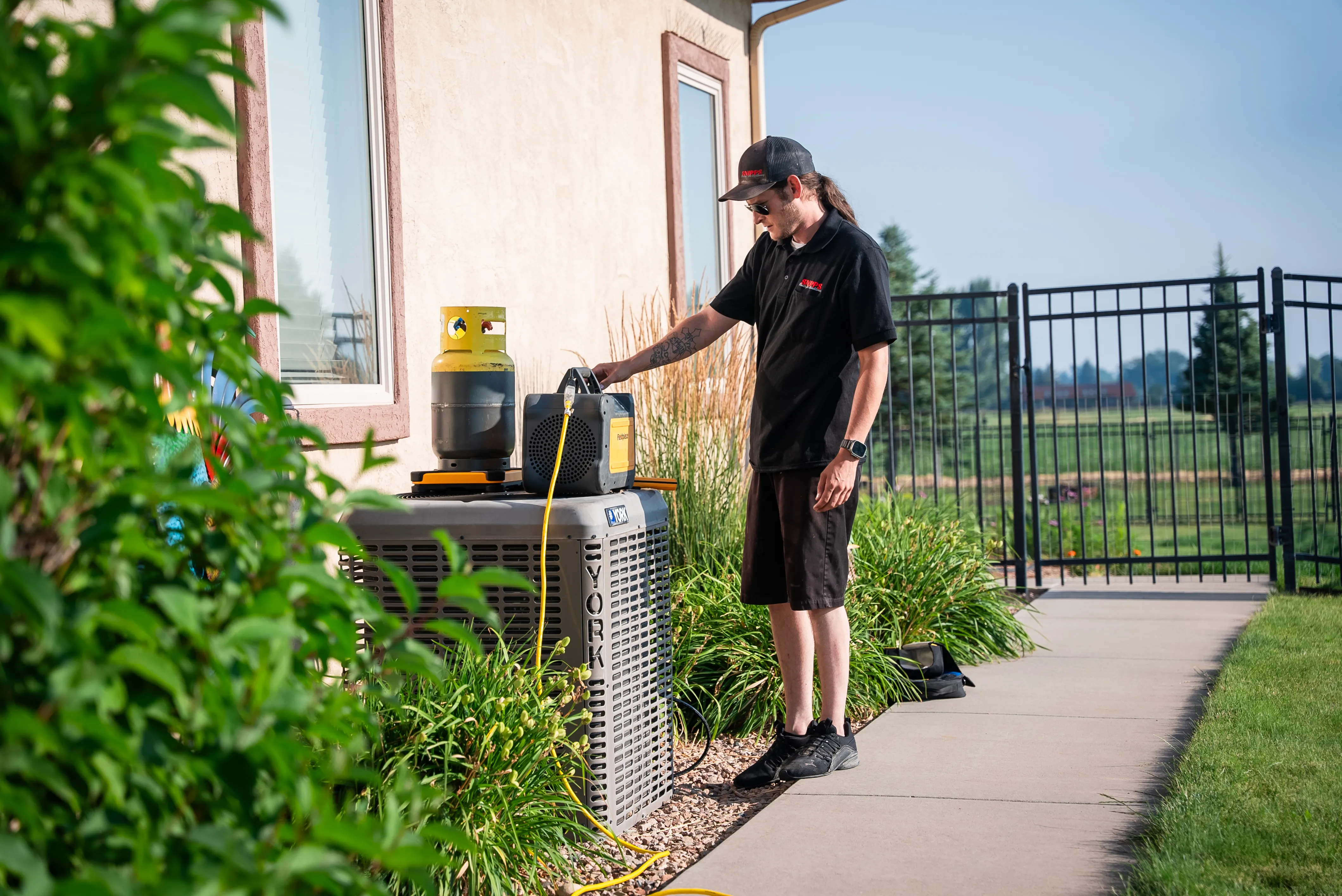
The best heat pumps for cold climate homes in Colorado in 2026 are not the same units that work fine in Phoenix or Atlanta, and installing the wrong one is how a homeowner ends up disappointed with heat pump technology that would have worked just fine if it had been matched to this climate.
Western Colorado adds real cold to the equation, not the mild winters most heat pump marketing is built around. A unit rated for cold-climate performance in a coastal state can still fall short once temperatures drop into the single digits across the Uncompahgre Valley or the high country around the ski towns.
This guide covers what separates a genuinely cold-climate-capable heat pump from one that just claims to be, and how to match that technology to a specific Western Colorado home.
None of this is about brand loyalty, since several manufacturers now build genuinely capable cold-climate systems. A household already comparing heat pump installation cost in Montrose should understand the technology differences first, since the cheapest unit on paper is not always the cheapest one to run through a Western Colorado winter.
In this article, you will learn about:
- Why a standard heat pump struggles in a Colorado winter
- What actually makes a heat pump cold climate rated
- Matching a heat pump to your specific Western Colorado home
- What to look for before you buy
Keep reading to see exactly what separates a true cold-climate heat pump from a unit that only looks the part on a spec sheet, and how to pick the right one for your home.
Why a standard heat pump struggles in a Colorado winter
A heat pump does not generate heat the way a furnace does. It moves heat from one place to another, pulling warmth out of outdoor air and concentrating it inside the house, and that process gets harder as the outdoor air gets colder.
A standard heat pump built for a milder climate starts losing real capacity well before a Western Colorado cold snap even gets going.
How a heat pump moves heat, and why cold air makes that harder
Refrigerant inside a heat pump absorbs heat from outdoor air, even air that feels cold to a person standing outside, and carries it indoors through a compressor and a coil. Warmer outdoor air carries more usable heat, so the system works less to deliver the same result.
As the outdoor temperature drops, there is simply less heat available to extract, and the compressor has to work harder to pull out what remains.
- Lower outdoor temperature means less ambient heat available to extract
- The compressor has to run at higher capacity to compensate
- Frost buildup on the outdoor coil requires periodic defrost cycles
- Airflow across the outdoor unit matters more as output drops
A standard heat pump's heating capacity and efficiency both fall off as a result of these factors, sometimes sharply once the temperature drops into the teens or lower.
None of this makes a heat pump a bad choice for this climate. It just means the specific model and its rated performance at low temperatures matter far more here than they would in a milder state.
Altitude adds its own complications
Thinner air at elevation changes how any heat-moving equipment performs, heat pumps included. A system engineered and rated without accounting for Western Colorado's elevation can underperform its own spec sheet once installed.
This is part of why a heating system matched to this elevation is a different exercise here than it is at sea level, and why a generic online spec comparison rarely tells the whole story for this market.
Where backup heat has to take over
Every heat pump, cold-climate rated or not, eventually reaches a point where it needs help. The question is not whether backup heat exists, but at what outdoor temperature it has to kick in and how often that actually happens in a given town.
A standard heat pump might need backup heat starting somewhere in the 30s. A genuinely cold-climate model pushes that threshold much lower, which is the entire point of the technology.
What actually makes a heat pump cold climate rated
Cold climate rated is not a protected term, and marketing language varies between manufacturers. A few concrete features separate a system that actually performs in this climate from one that simply uses the label.
These are the specifics worth checking rather than taking a brochure's word for it.
Variable-speed compressors change the math
Older heat pump designs run at a single speed, either fully on or fully off, which leaves little room to adapt as outdoor conditions change. A variable-speed, or inverter-driven, compressor ramps its output up or down to match the actual heating demand.
This matters most at the cold end of the range, where a variable-speed system can keep producing meaningful heat rather than cycling on and off in a losing battle against the outdoor temperature. Many ductless heat pump systems use this kind of compressor by design, which is part of why they have become a serious cold-climate option rather than just a mild-climate add-on.
Low-temperature operating ratings worth checking
A manufacturer's spec sheet usually lists heating capacity at a few outdoor temperature points, and the number that matters most for this climate is the one at or near zero, not the one at a mild 47 degrees most national marketing leads with.
The U.S. Department of Energy runs a Cold Climate Heat Pump Technology Challenge that requires qualifying models to deliver 100 percent of their rated heating capacity at 5 degrees Fahrenheit without relying on backup heat, a benchmark that is a useful reference point when comparing specs.
- Heating capacity listed at 47 degrees, the mild reference point most brochures lead with
- Heating capacity listed at 17 or 5 degrees, the numbers that actually matter here
- The outdoor temperature at which backup heat engages
- Whether the manufacturer publishes a cold-climate or low-temperature rated model
A system that falls well short of the Department of Energy's benchmark is not necessarily a bad heat pump, but it is one that will lean on backup heat far more often in a Western Colorado winter than its brochure might suggest.
Backup heat and dual-fuel setups done right
A dual-fuel setup pairs a heat pump with a gas furnace, letting the heat pump handle the milder days and the furnace take over once temperatures drop past a set point. Done well, this combines the efficiency of a heat pump with the raw output of a furnace exactly when it is needed most.
Deciding between a heat pump and a furnace for the backup role, or relying on simple electric heat strips instead, changes both the upfront cost and the long-term efficiency of the system, and is worth settling before installation rather than after.
Matching a heat pump to your specific Western Colorado home
The right heat pump for a house in the valley is not necessarily the right one for a house at 9,000 feet. Elevation, existing ductwork, and how the home is actually used all change the answer.
The sections below cover the biggest variables worth working through before settling on a system.
Valley floor versus high alpine elevation
A home in the valley around Delta deals with real winter cold, but nothing close to what a home much higher up experiences. The same holds in Olathe, where temperatures stay manageable for a heat pump most of the season.
Climb toward the high country and the math changes. A house out past Gunnison sees colder average lows and more days where a heat pump leans on backup heat, which affects both the sizing of the system and whether a dual-fuel setup makes more sense. The same is true up near Lake City, where a heat-pump-only system has to work much harder on the coldest nights of the year.
Ducted systems versus ductless mini-splits
A home with existing, well-sized ductwork is usually a good candidate for a ducted heat pump system that uses the same distribution the furnace already relies on.
A home without ductwork, or with ducts that were never sized correctly, is often a better fit for a ductless mini-split setup instead, since it skips the duct losses entirely and lets each zone run independently.
- Ducted systems reuse existing supply and return ductwork
- Ductless systems install one outdoor unit with one or more indoor heads
- Ductless setups avoid duct losses but cost more per zone added
- Ducted systems centralize airflow but depend on the condition of the ducts
Comparing ductless mini-split installation cost against the cost of adding or reworking ductwork for a ducted system is worth doing before committing to either path, since the cheaper-looking option on paper is not always the cheaper one once labor is included.
Homes without existing ductwork in the resort towns
Second homes and older cabins across the resort corridor often have no ductwork at all, which makes ductless systems a natural fit rather than a workaround.
This shows up often in homes around Telluride, where a ductless, cold-climate-rated heat pump can heat and cool a property that was never built with a central system in mind. The same pattern holds in Crested Butte, without the added cost of installing ductwork in a house that was not designed for it.
What to look for before you buy
Once the technology and the home's specific needs are both clear, a few practical checks separate a good purchase from a disappointing one.
None of these require specialized knowledge to ask about, just a willingness to ask before signing anything.
Manufacturer and dealer certification
Not every installer has the training or the manufacturer backing to install and service every cold-climate heat pump correctly. Certification from the manufacturer usually means the installing company has been trained on that specific equipment's quirks.
- Manufacturer-specific installation training for the equipment in question
- Access to extended or upgraded warranty tiers tied to certified installation
- Direct technical support from the manufacturer for complex installs
- Parts availability tied to the certified dealer relationship
Snipps installs Amana equipment and carries Fujitsu Elite Dealer status, which comes with a 12-year warranty on qualifying Fujitsu systems, the kind of manufacturer relationship worth asking any installer about directly.
Sizing done for your house, not a formula
A heat pump sized off a generic square-footage formula, rather than an actual load calculation for the house, is one of the most common reasons a system underperforms in this climate.
A proper sizing process accounts for insulation, window quality, elevation, and how the house is actually used, not just its floor plan. Snipps sizes and installs heat pump systems based on the specific house rather than assuming a system that works well in a different state will perform the same way here.
A load calculation worth trusting typically looks at:
- Square footage, ceiling height, and overall insulation level
- Window count, orientation, and glazing quality
- The home's elevation and typical winter low temperatures
- Existing ductwork condition, if the home has any
- How many people live in the home and how it is actually heated and cooled day to day
Skipping any one of these steps is how a system ends up undersized for the coldest nights or oversized and short cycling the rest of the winter.
This is also where a heating system built for mountain conditions often differs from a standard national recommendation, since the same square footage calls for different equipment depending on where the house actually sits.
Warranty, maintenance, and realistic expectations
A cold-climate heat pump is still a mechanical system, and it still needs regular maintenance to perform the way its spec sheet promises. Skipping maintenance erodes cold-weather performance fastest, since a dirty coil or a low refrigerant charge hits efficiency hardest exactly when the system is already working its hardest.
A maintenance plan that includes a seasonal check before winter is one of the more reliable ways to keep a cold-climate heat pump performing at the level it was sold on, rather than quietly losing capacity year over year.
Realistic expectations matter too. Even the best cold-climate heat pump on the market will lean on backup heat on the coldest nights of the year, and a homeowner who understands that going in ends up far happier with the system than one expecting it to never need help.
Conclusion
The best heat pump for a cold-climate Colorado home is not necessarily the one with the flashiest marketing, but the one with a genuine low-temperature rating, a variable-speed compressor, and a sizing job done for the actual house rather than a formula. Altitude, existing ductwork, and how cold a specific town actually gets all factor into which system makes sense.
None of this has to be guesswork. A proper load calculation, an honest look at backup heat needs, and a dealer who can speak specifically to this climate turn a confusing purchase into a straightforward one.
Snipps Heating & Air Conditioning has installed heat pump systems across Western Colorado for years, from valley floor homes to high-altitude cabins without existing ductwork. For help choosing and sizing a cold-climate heat pump for your home, Snipps Heating & Air Conditioning is ready to help.
HVAC repairs, maintenance, and installation for homes and businesses across Montrose and the Western Slope. Family-run, certified, and here when you need us since 1996.