WE ARE HIRING!
What property managers in Montrose should know about HVAC service contracts this winter
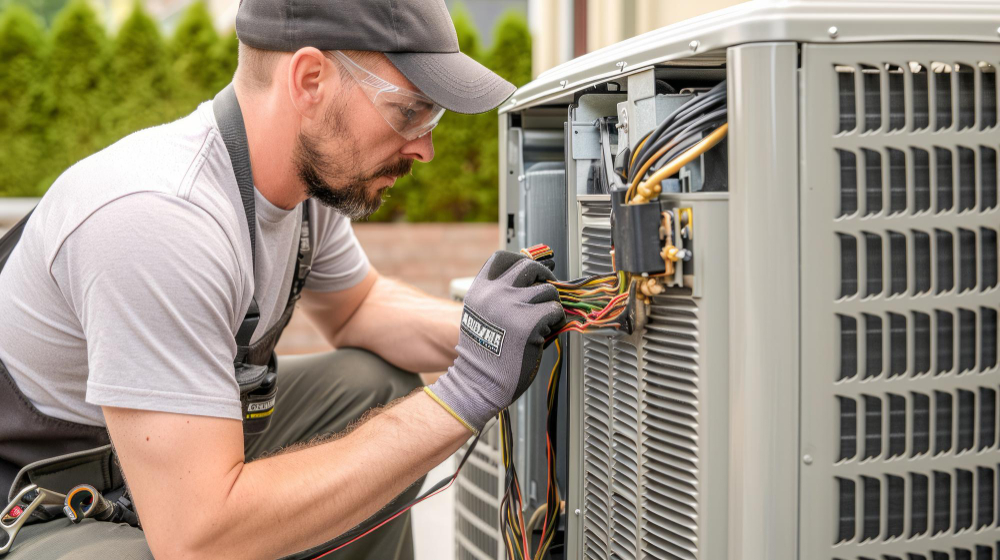
HVAC service contracts matter more for property managers in Montrose than almost anyone else in the housing market, because a single heating failure rarely stays a single problem when you're responsible for more than one unit. A tenant without heat during a hard freeze isn't just an inconvenience, it's a liability sitting on your desk.
Western Colorado winters put real strain on heating equipment, and a portfolio of rental units or second homes multiplies that risk instead of spreading it out. One aging furnace failing at the wrong moment can turn into a dozen phone calls, an emergency repair bill, and a tenant who remembers exactly how it was handled.
This article looks at what a real HVAC service contract should include, the questions worth asking before signing one, and what it actually looks like to get ahead of winter instead of reacting to it. It also touches on why a heat pump versus furnace decision matters differently across a portfolio of properties than it does for a single home.
In this article, you will learn about:
- Why winter is the worst time to discover you don't have a service contract
- What a real HVAC service contract should actually include
- Questions property managers should ask before signing anything
- Getting ahead of winter with the right HVAC partner in Montrose
Keep reading to see exactly what separates a service contract that actually protects your properties from one that's just a piece of paper.
Why winter is the worst time to discover you don't have a service contract
Winter weather is expensive on a national scale, and that cost shows up at the property level too. According to the National Centers for Environmental Information, winter storms in the U.S. average $4.1 billion in damage per event, a reminder that cold-weather failures are measurable financial risk, not just an inconvenience.
That risk concentrates fast when you're managing multiple units or several properties at once. A single cold snap can turn a manageable maintenance issue into a portfolio-wide emergency overnight.
One furnace failure call becomes a dozen tenant calls
A single-family homeowner dealing with a dead furnace has one household to manage through the inconvenience. A property manager with the same failure, multiplied across a building or a scattered portfolio, is suddenly fielding calls from every affected tenant at once, often during the exact week every other HVAC company in town is also slammed.
Without a standing service relationship, you're competing with every other emergency call in Montrose for the same handful of available technicians. A heating system replacement scheduled calmly in October looks very different from one arranged in a panic during a January cold snap. Watching for signs a furnace needs replacing in October costs nothing, discovering them in January costs a lot more.
Emergency repairs cost more than planned maintenance, every time
An emergency call almost always costs more than the same repair scheduled in advance, simply because urgency removes your ability to shop around or wait for a better window. Overtime, rush fees, and whatever parts happen to be on the truck that day all add up fast.
Planned maintenance catches a failing component, a furnace nearing the end of its life, well before it becomes a weekend emergency. It also catches the early signs that a system needs replacing before Colorado winter hits in full force. That difference alone often justifies the cost of a service agreement within a single winter.
A vacant rental in a hard freeze is its own kind of emergency
An occupied unit at least has a tenant who notices the heat went out. A vacant rental, a second home between guests, or a property between tenants can sit cold for days before anyone realizes a system has failed, and by then frozen pipes are often already part of the problem.
This risk runs especially high for second homes and vacation rentals in mountain towns like Telluride and Crested Butte, where a property can sit empty for long stretches between bookings during exactly the weeks when a heating failure does the most damage.
A single undetected heating failure in a vacant property can cascade into several distinct problems at once:
- Frozen and burst pipes once interior temperatures drop far enough.
- Water damage to flooring, drywall, and personal property once a pipe fails.
- Mold growth if water damage goes unnoticed for any length of time.
- A liability question for whoever was responsible for monitoring the property.
Catching a failure within hours instead of days is almost always the difference between a minor repair and a major claim. A service contract with real monitoring or regular check-ins during the coldest stretches of winter closes exactly this gap.
What a real HVAC service contract should actually include
Not every service agreement is built the same way, and some barely qualify as more than a discount on repair calls. A contract worth having goes well beyond a modest percentage off the invoice, and the question of whether a maintenance agreement is actually worth it usually comes down to exactly these elements.
A handful of specific elements separate a genuinely useful agreement from a marketing add-on.
Scheduled maintenance visits, not just emergency response
A real agreement includes actual scheduled visits, typically in spring and fall, where a technician inspects and services the system before the season that's about to stress it the most. That's different from a contract that only kicks in once something has already failed.
A proper seasonal visit typically covers a consistent set of checks, regardless of which specific system is being serviced:
- Filter inspection and replacement.
- Refrigerant levels and pressure checks.
- Electrical connections and capacitor condition.
- Thermostat calibration and controls testing.
- A visual inspection of ductwork and connections where accessible.
None of this is complicated work, but skipping it consistently is exactly how small issues turn into mid-winter breakdowns. For a portfolio of properties, that means AC tune-up and maintenance visits happening on a schedule the property manager controls, rather than waiting for a tenant complaint to trigger a service call.
Priority response built into the agreement
During a genuine cold snap, every HVAC company in the area gets flooded with calls at once. A contract that includes real priority scheduling, not just a vague promise of good service, is what actually gets a technician to a failed system faster than a walk-in customer.
That priority matters most for anything time-sensitive, including a heat pump or furnace that's completely down in freezing weather, where every extra hour without heat raises the risk of frozen pipes.
Clear terms for multi-property accounts
A property manager isn't a single-home customer, and a contract built for residential homeowners doesn't always translate cleanly to a portfolio. Clear terms for how multiple addresses, multiple systems, and multiple tenants are handled under one agreement matter more here than almost any other detail.
Confirm whether the contract covers only heating and cooling equipment, or extends to related systems like indoor air quality equipment that many rental properties also rely on. Ask directly how billing, scheduling, and reporting work across more than one property, before assuming a standard residential agreement will simply scale up without friction.
Questions property managers should ask before signing anything
A short list of direct questions does more to protect a portfolio than any sales brochure. The answers tell you exactly how a company actually operates once the contract is signed.
None of these questions are unusual to ask, and a contractor used to working with property managers should answer all of them without hesitation.
How are visits scheduled across multiple properties
Ask how scheduling actually works when a contract covers several addresses at once. A vague answer here often means the company hasn't really worked with multi-property accounts before.
A short sequence of scheduling questions tends to surface the real answer fast:
- Ask how often each property gets a scheduled visit under the contract.
- Ask whether visits are grouped by neighborhood or spread across the calendar.
- Ask who coordinates access with tenants or onsite staff before each visit.
- Ask how last-minute reschedules get handled during bad weather.
A company that already works with other property managers usually has clear, practiced answers to all four questions, rather than needing to figure it out as they go. Vague or improvised answers here are worth noticing before anything gets signed.
What's the real difference in response time
Ask specifically how much faster a contract customer gets a technician during a busy cold snap compared to someone calling in without an agreement. A real number, even an approximate one, is a better answer than a general promise of priority service.
This distinction matters most during the exact weeks a furnace is most likely to fail, since that's also when every other HVAC company in Montrose is at its busiest.
Who actually shows up, and do they know the property's history
Ask whether the same technician or team handles a property over time, or whether every visit is essentially a stranger starting from scratch. Continuity matters more for a rental property than most owners realize, since a technician who's serviced a unit before already knows its quirks.
A contract worth having usually keeps some consistency here, rather than treating every visit as an isolated, unrelated service call.
Getting ahead of winter with the right HVAC partner in Montrose
Everything above is about evaluating a contract on paper. This section is about what it actually looks like to put the right one in place before winter creates urgency.
Getting ahead of the season is almost always easier and cheaper than catching up once temperatures have already dropped.
Why altitude and older housing stock make this a bigger deal here
Montrose and the surrounding Western Colorado communities sit at an elevation where heating equipment works harder than it would at sea level, and a meaningful share of the local rental housing stock is older, with systems that weren't necessarily sized or installed with today's standards in mind.
A few local realities shape why a generic maintenance plan doesn't always fit here:
- Elevation reduces available heating capacity compared to the same equipment at sea level.
- Wide day-to-night temperature swings put extra cycling stress on equipment.
- Older housing stock often carries undersized or outdated heating systems.
- Harsh winters leave very little margin for a slow repair response.
None of this means older systems can't be managed well, it just means the maintenance plan has to account for these realities rather than assuming a one-size-fits-all schedule works everywhere. That combination means choosing a heating system built for high-altitude Colorado homes is a genuinely different decision here than it would be managing the same type of property somewhere milder.
Coordinating around tenants and seasonal occupancy
A reliable HVAC partner adjusts scheduling around how a property is actually used, not just a fixed calendar. A year-round rental, a seasonal ski-town property, and a mostly-vacant second home all call for a different maintenance rhythm.
That rhythm looks different depending on the property type:
- A year-round rental needs standard seasonal maintenance on a predictable schedule.
- A seasonal ski-town property needs a pre-season check timed to the start of the booking season.
- A mostly-vacant second home needs more frequent monitoring during the coldest months, not less.
Properties with heavy seasonal turnover, including those near the Montrose core service area and out toward the ski resort towns, benefit from a company that already understands how occupancy swings through the year rather than treating every property the same way. Matching the maintenance rhythm to how a property is actually used is often the difference between a contract that feels generic and one that actually fits the portfolio.
What it looks like to start a contract before the cold hits
Starting a service relationship in October or November, rather than waiting for the first emergency, gives a technician time to actually inspect every property in a portfolio and flag anything that needs attention before it becomes urgent.
That early start also means scheduling isn't competing with every other property manager's emergency calls once the real cold arrives. A maintenance agreement put in place now is doing its job all winter instead of starting from a reactive position.
Conclusion
HVAC service contracts matter more for property managers than almost any other type of customer, simply because one failure rarely stays isolated to one unit. The contracts worth having include real scheduled maintenance, genuine priority response, and terms built for a portfolio rather than a single home.
The questions worth asking before signing are straightforward: how scheduling works across multiple properties, how much faster response actually is under contract, and whether the same technicians return visit after visit. A contractor used to working with property managers answers all of these clearly.
Snipps Heating & Air Conditioning has served Montrose and the surrounding Western Colorado communities for decades, with the local experience a portfolio of properties actually needs going into winter. Reach out to Snipps Heating & Air Conditioning to talk through a service contract built around how your properties are actually used.
HVAC repairs, maintenance, and installation for homes and businesses across Montrose and the Western Slope. Family-run, certified, and here when you need us since 1996.