WE ARE HIRING!
How to find a reliable HVAC contractor in Montrose, CO: what to look for
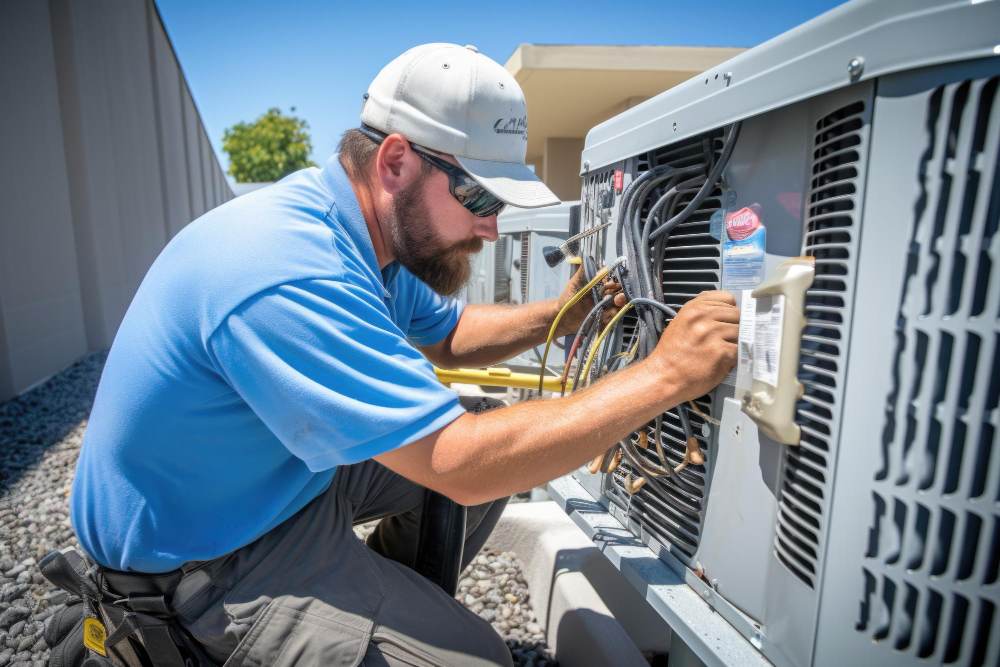
Finding a reliable HVAC contractor in Montrose, CO comes down to a handful of concrete things you can actually check, not a gut feeling about who sounded nice on the phone. The wrong choice costs more than a bad experience, it can mean a system that never performs the way it's supposed to.
Western Colorado's elevation and the swing between genuinely hot summers and genuinely cold winters put real demands on heating and cooling equipment, which makes installation quality matter even more here than in a milder climate. A system sized or installed wrong by an inexperienced crew can struggle for years, quietly costing money every single month.
This article walks through what separates a trustworthy contractor from one to avoid, the questions worth asking before any work begins, and what good, ongoing support actually looks like. It also covers a few warning signs that show up early, often well before anyone starts talking about a heating system replacement.
In this article, you will learn about:
- What actually makes an HVAC contractor trustworthy
- Red flags that mean it's time to call someone else
- Questions worth asking before you sign anything
- What working with a reliable Montrose HVAC company actually looks like
Keep reading to find out exactly what separates a contractor worth hiring from one that's going to cost you more in the long run.
What actually makes an HVAC contractor trustworthy
Trustworthy isn't a feeling, it's a short list of things you can verify before any work starts. A license, the right certifications, and a real history in the community all matter more than how polished the sales pitch sounds.
The stakes are higher than most homeowners realize. According to the ENERGY STAR program, more than half of new HVAC systems in U.S. homes never perform to their rated efficiency because of improper installation, and a poor install can cut performance by as much as 30 percent. That gap exists entirely because of who did the work, not the equipment itself.
Licensing isn't optional, it's the floor
A licensed contractor has passed a baseline test of competency and carries accountability if something goes wrong. An unlicensed installer might still do fine work, but there's no real recourse if they don't, and no guarantee the job meets code.
Asking to see a current license number takes thirty seconds and tells you more than almost any other question. A contractor who hesitates or changes the subject has already told you what you need to know.
Certifications that actually mean something
Not all certifications carry equal weight. NATE certification tests a technician's actual knowledge of install and repair work, rather than just confirming they showed up to a training session, and manufacturer-specific dealer programs, like becoming a Fujitsu Elite Dealer, require ongoing training most general contractors never bother with.
These distinctions matter most on equipment that depends on precise setup to perform, such as a ductless mini-split system. A technician without that specific training can still mount the unit, but getting the charge, the line set, and the controls right is a different skill entirely.
A track record you can actually verify
Years in business and real customer reviews matter more than a polished website. A company that's operated in the same community for decades has survived on repeat business and referrals, which is a much harder thing to fake than a five-star rating.
A handful of places are worth checking before you call anyone:
- Google reviews, read for specifics rather than just the star count.
- The Better Business Bureau, for complaint history and how a company responded to it.
- Local community groups or neighbors who've actually used the company.
- How long the business has operated under its current name at its current location.
Look for specifics in what you find, not just a high average rating. A review that mentions a technician by name, describes an honest diagnosis, or talks about work that held up months later says more than a generic compliment ever could.
Red flags that mean it's time to call someone else
Most red flags show up before any tools come out of the truck. Paying attention during the quote process saves a lot of headaches later.
None of these signs are proof of bad work on their own, but together they form a pattern worth taking seriously.
A quote with no explanation behind the number
A legitimate quote breaks down equipment, labor, and anything else that affects the price, even in general terms. A number with no explanation behind it, or one that changes dramatically between contractors for the same job, is a sign something isn't being measured or explained correctly.
A quote worth trusting usually itemizes a few things clearly:
- The specific equipment being installed, including brand and capacity.
- Labor, separate from the cost of materials.
- Permit fees, where a permit is required for the work.
- Disposal of the old equipment.
This matters even more for bigger jobs like a new system installation or a full furnace replacement, where sizing and equipment choice genuinely change the final cost.
The same logic applies to central air conditioner installation, where the price can swing widely based on home size and ductwork condition. It applies just as much to ductless mini-split systems, where equipment choice alone can account for a big part of the final number.
That level of detail also makes it far easier to compare two contractors honestly, instead of comparing two numbers that were never measuring the same scope of work.
Pressure to sign today or lose the deal
A reliable contractor wants you to make a confident decision, not a rushed one. Artificial urgency, a deal that's only good if you sign on the spot, is a classic pressure tactic that has nothing to do with the actual condition of your equipment.
A legitimate same-day or next-morning diagnosis for something like a failing furnace is reasonable when the system is actually down. The same holds for signs your AC needs service before a heat wave, when a technician flags a real, observable problem rather than inventing one. A manufactured deadline attached to a sales pitch is a different thing entirely.
No real answer on equipment, warranty, or who's showing up
Ask what brand is being installed, what the warranty actually covers, and whether the same technician handles the follow-up, and a reliable contractor answers clearly. Vague or shifting answers to any of these are worth noticing.
This becomes especially important with something like heat pump installation, where the brand and the specific model genuinely affect how the system performs through a Western Colorado winter.
Questions worth asking before you sign anything
A short list of direct questions does more to protect you than reading another review. The answers, and how confidently they're given, tell you most of what you need to know.
None of these questions are complicated, and a contractor worth hiring should be comfortable with every single one of them.
What's actually included in this job
Before agreeing to any price, a simple sequence of questions covers most of what matters:
- Ask exactly what the price includes, from equipment down to final cleanup.
- Ask whether a permit is required, and who is responsible for pulling it.
- Ask what happens to the old equipment once it's removed.
- Ask for a walkthrough of the new system once installation is finished.
- Ask what gets tested before the crew considers the job complete.
Skipping any of these isn't automatically a problem, but a contractor who answers all five without hesitation is showing you how they actually operate. For something like AC tune-up and maintenance, ask exactly what gets checked during a visit, not just that maintenance was performed.
Who's doing the work, and how long have they been doing it
A company can be reputable overall while sending a brand-new technician to a complicated job. Asking directly who will actually be on-site, and how experienced they are with the specific equipment involved, is a fair question.
A few follow-up questions help confirm the answer holds up:
- How long has this technician worked for the company.
- Have they installed this specific type of system before.
- Is there a lead technician who oversees more complex jobs.
This matters most on technically demanding work, including proper sizing for indoor air quality equipment, since getting ventilation and filtration right depends on real experience with the specific system.
What happens if something goes wrong later
Ask what the workmanship warranty actually covers, separate from the manufacturer's equipment warranty, and how a callback gets handled if something isn't right. A contractor confident in their own work answers this without hesitation.
This is also a good moment to ask about ongoing support, including whether a maintenance plan is available once the installation is finished, since a single visit is rarely the end of the relationship with reliable equipment.
What working with a reliable Montrose HVAC company actually looks like
Everything above is about avoiding a bad outcome. This section is about what a good one actually looks like in practice, once you've found the right company.
It usually comes down to three things: real local knowledge, a track record that's held up over time, and support that continues well after the invoice is paid.
Technicians who understand Western Colorado's altitude and climate, not just HVAC in general
Elevation changes how heating and cooling equipment performs, and a technician who's only ever worked at lower altitudes may not account for that automatically. The right setup for a Montrose home often differs from a system built for a city at sea level, even with identical square footage.
A few things worth asking a local technician about directly:
- How altitude affects heating capacity and recovery time in winter.
- How wide day-to-night temperature swings factor into sizing.
- Which equipment is actually rated for this elevation, not just this region.
That local knowledge shows up in smaller decisions too, like choosing a heating system built for high-altitude Colorado homes rather than whatever happens to be on the truck that day.
A company that's been around long enough to have a reputation
Snipps Heating & Air Conditioning has served Montrose and the surrounding Western Colorado communities for roughly three decades, which is long enough to build an actual reputation rather than just a marketing claim. A company's history becomes a genuine asset once there's enough of it to stand behind.
Reviews, referrals, and repeat customers accumulate naturally over that kind of timeline, and they're far harder to manufacture than a new company's early five-star ratings.
Support that doesn't end the day the invoice is paid
A reliable company keeps showing up long after the installation is finished. Whether that's a seasonal tune-up or a quick answer to a question about an unfamiliar sound, support shouldn't stop the moment the job is marked complete.
The real value of a maintenance agreement often comes down to exactly this, having someone who already knows the system check in before small issues turn into bigger ones.
Conclusion
Finding a reliable HVAC contractor in Montrose isn't about luck or a persuasive sales pitch. It comes down to a license you can verify, certifications that actually mean something, and a handful of direct questions a good contractor answers without flinching.
Watching for the opposite signs matters just as much. Vague quotes, artificial urgency, and shifting answers about equipment or warranty coverage are all worth paying attention to before any work begins, not after.
Snipps Heating & Air Conditioning has spent decades serving Montrose and the communities around it, with the licensing, certifications, and local experience this kind of decision calls for. Fast, quality service at a fair price starts with a conversation. Reach out to Snipps Heating & Air Conditioning to talk through what your home actually needs.
HVAC repairs, maintenance, and installation for homes and businesses across Montrose and the Western Slope. Family-run, certified, and here when you need us since 1996.